.svg)

.svg)


When a resident is undecided or has already declined their renewal, my advice to the onsite team is usually pretty simple.
Pick up the phone and call them.
I know that may sound like strange advice from someone who spends her days helping operators automate their renewal programs. But the goal of automation should never be to remove every human interaction from the process. It should handle the repetitive work consistently, so onsite teams still have time for the conversations only a person can have.
Working with partners at Renew, I see the goals set at the portfolio level, the realities facing onsite teams, the configurations partners choose during a pilot, and the results that sometimes change their minds later. One lesson comes up again and again: more resident decisions are worth a conversation than operators may think.
“Nothing We Could Have Done” Is Often a Guess
When a resident leaves, the explanation can become tidy very quickly. Their mind was already made up. They wanted to buy a house. They were relocating. They were never going to renew.
Some move-outs really are unavoidable. But when I look at the data with our partners, I also see residents leaving for reasons a property team could have addressed.
An open maintenance ticket is not an abstract retention problem. It is a problem someone can resolve. A resident who wants more or less space may be done with a specific apartment, but not necessarily with the community or the operator’s portfolio. A resident who keeps revisiting the notice-to-vacate process may be signaling hesitation before they ever tell the office what is wrong.
A resident saying no does not always mean there was nothing the team could have done.
None of those signals guarantees a save. They do something more practical: they give the team a reason to ask a better question before the resident becomes a line in a move-out report.
That distinction matters. By the time a team reviews final renewal outcomes, every declined resident looks equally lost. Earlier in the journey, their situations may be very different. One resident has a firm moving date in another state. Another has been waiting for a maintenance issue to be resolved. Another assumes there are no larger floor plans available.
Treating all three residents the same makes the report easier to read and the retention strategy less useful. I would rather give the team an earlier view into what the resident may be thinking, so they have a chance to learn which situation they are actually dealing with.
A Phone Call Is Not the Opposite of Automation
There is a false choice hiding in many conversations about property technology. Either a team automates the process, or it delivers a personal resident experience. In practice, onsite teams need both. The trick is knowing which work belongs to the system and which moment belongs to a person.
Renewal delivery, reminders, and follow-up should not depend on whether the person who usually owns them is working that day. It should not matter who on the site team is sick, on vacation, or no longer there. The renewal process needs to keep moving, and residents need to be nurtured and followed up with.
That is the job automation should protect. It creates a consistent baseline across every resident and property, even when the onsite team is juggling tours, maintenance requests, resident questions, packages, reporting, and everything else that arrives before lunch.
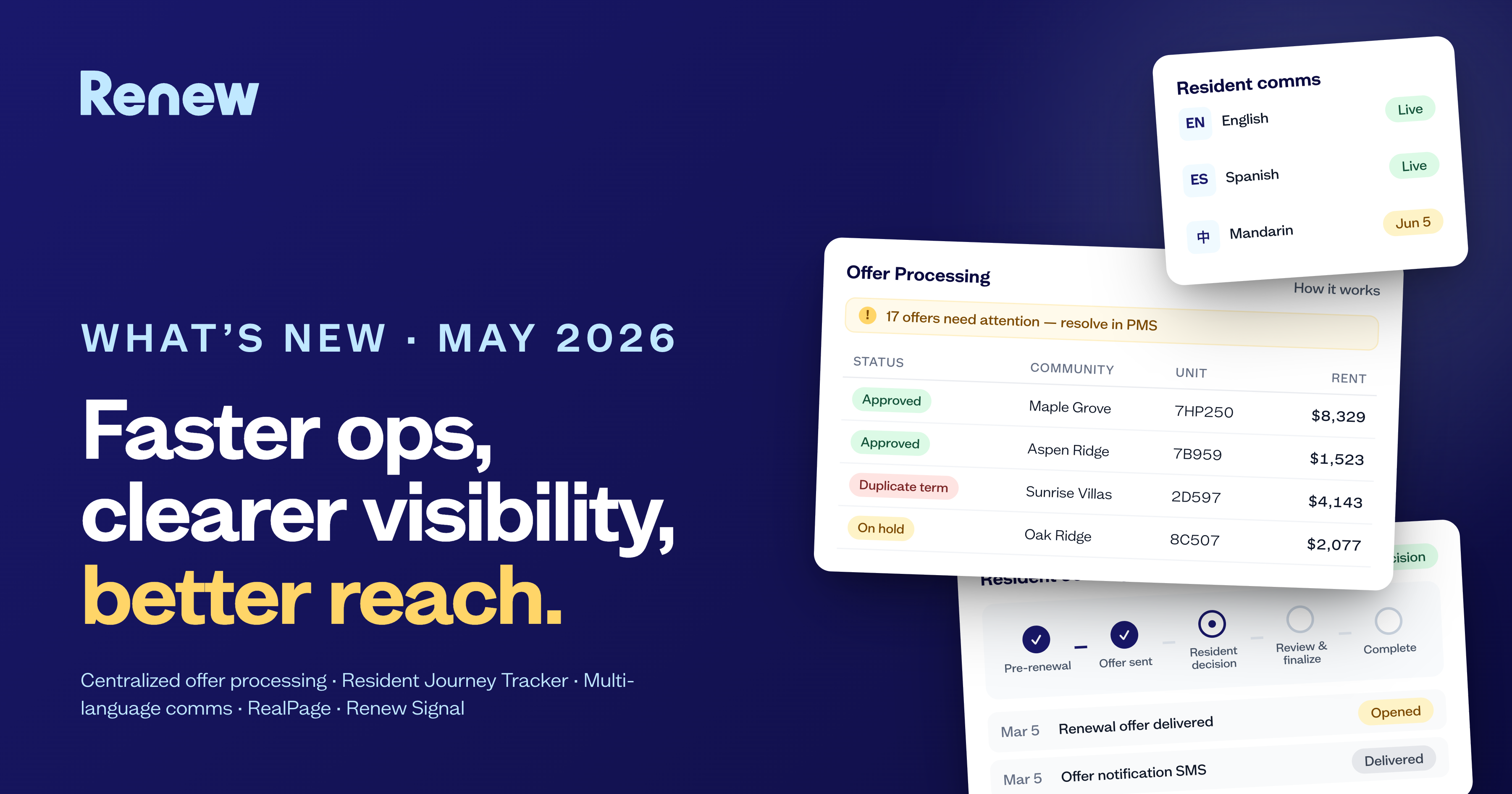
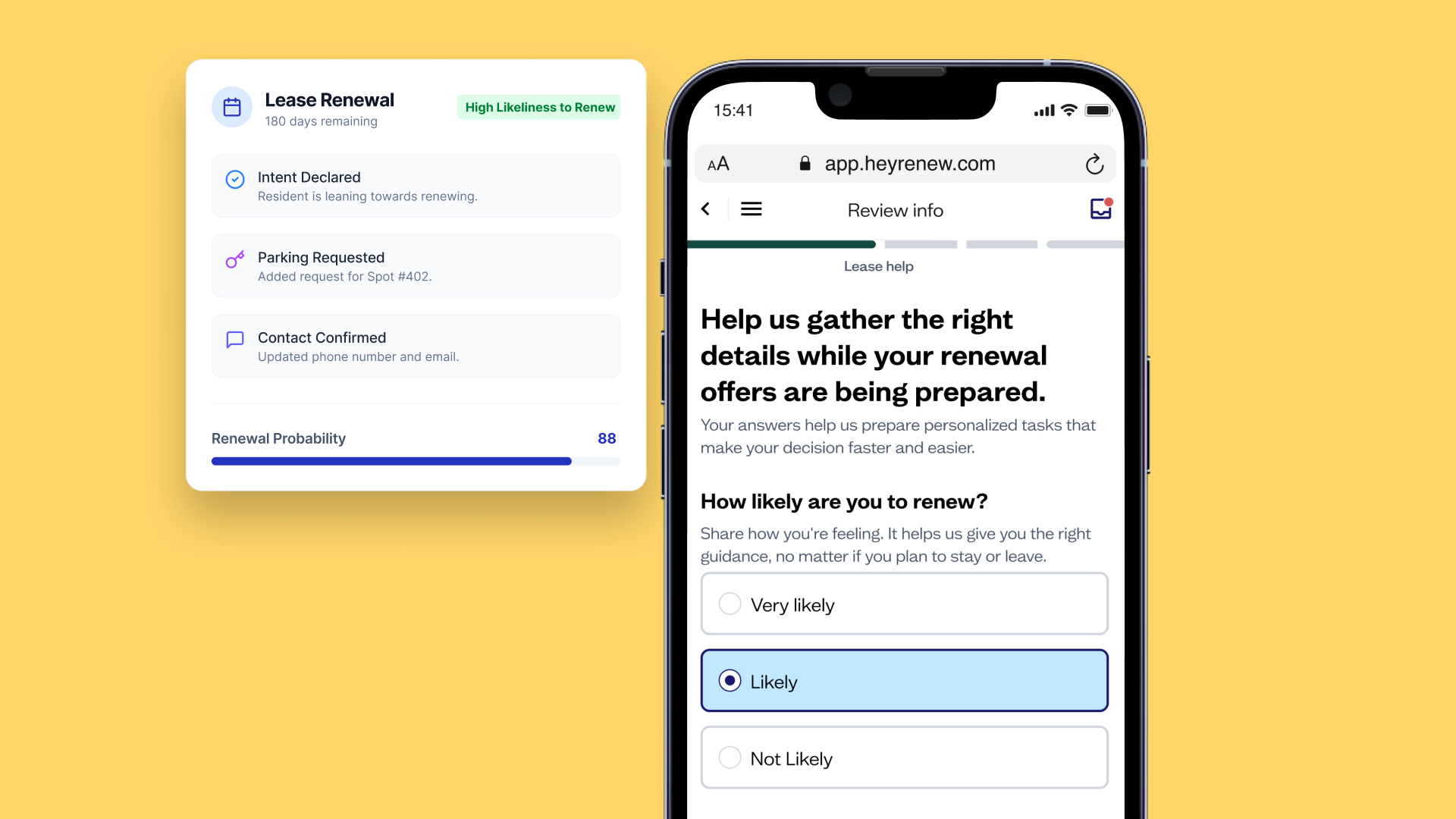
That’s where technology (like Renew) helps site teams see which residents need something more than the automated process—and gives them enough context to know why.
A resident who received an offer and moved smoothly through the process may not need a call. A resident who appears stuck, repeatedly reviews move-out information, submits a request, or has a solvable concern might. I am not suggesting that onsite teams add a manual call task for every household. The goal is to make the calls more informed and better timed.
Automation is great, but personal touch is key.
To me, that is not a compromise. It is the operating model. Let automation carry the repetitive work. Use resident behavior and process data to identify the exceptions. Give onsite teams enough room to respond like people when a person can still affect the outcome.
A Pilot Should Change More Than the Renewal Rate
Most of our partners sign up for Renew with a specific goal. They want to improve retention, make offer delivery more consistent, or take manual follow-up off onsite teams. That focus is useful at the beginning because it gives us a shared definition of progress.
The most interesting part often comes after the first goal is within reach.
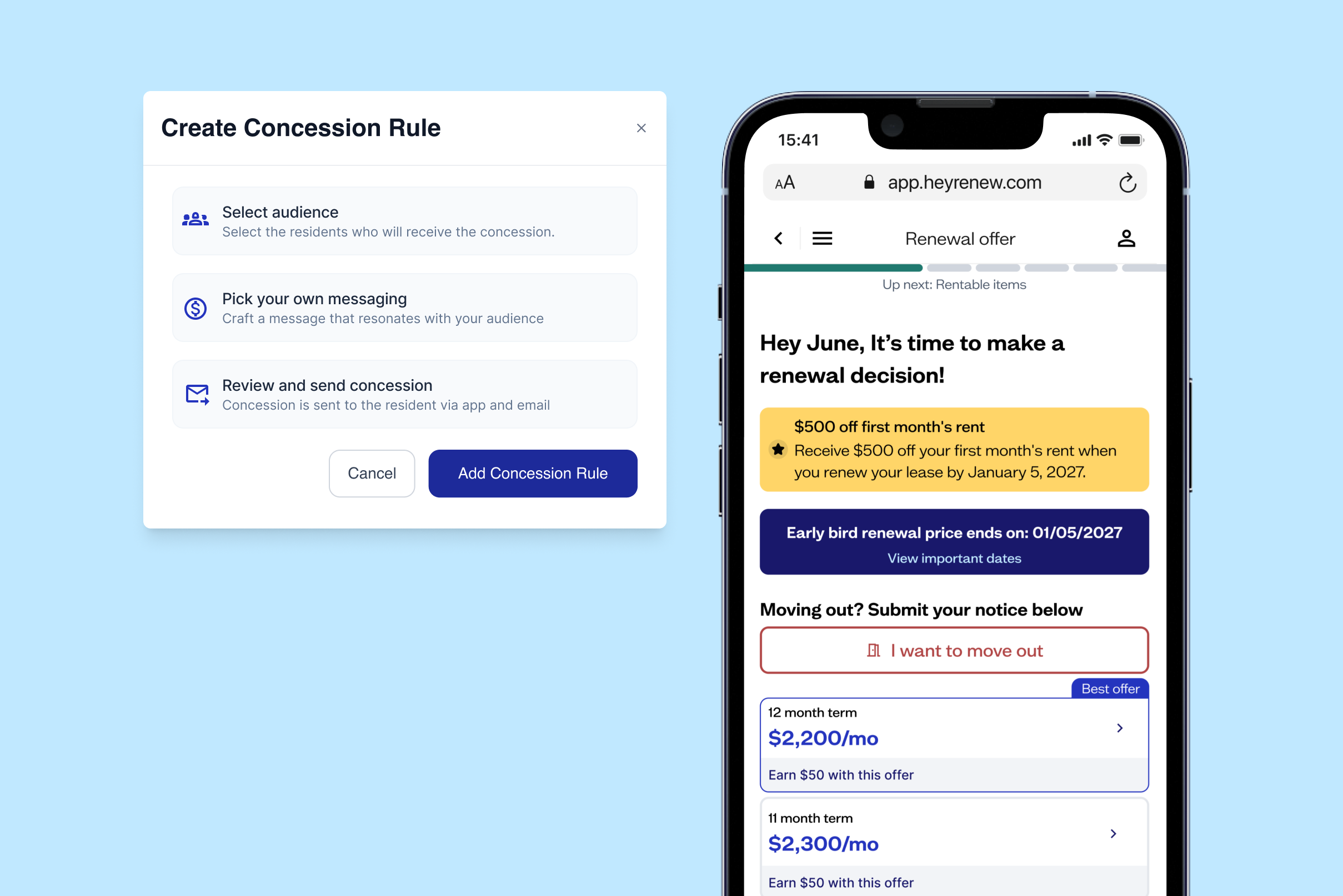
I have watched partners reconsider features they initially dismissed once they could see what the program was doing. Dynamic Pricing is a good example. A partner may begin a pilot focused entirely on hitting a retention target and have little interest in testing an early-bird offer. Once the core process is performing, we can look at a second question: could a time-sensitive offer encourage residents to decide earlier?
That changes the conversation from “Did more residents renew?” to “When did they decide, and what could the team do with that time?” Earlier decisions can give a property more clarity for planning, whether the resident stays or leaves. The feature that looked optional during setup may become valuable once the operator can see the wider effect of decision timing.
I do not think every operator should switch on every feature at once. I do think a pilot should be treated as a learning process rather than a software installation. Start with the priority. Review the actual behavior. Test the next idea. Keep what produces a useful change.
That ongoing work is also why my role does not stop at implementation. I am constantly looking for ways to hit the goals a partner brought to us and uncover value beyond them. The best long-term relationships grow when the data challenges an assumption, and we are willing to adjust the strategy together.
Renewal Delivery Is a Very Low Ceiling
A lot of people have this idea that Renew is just for renewal delivery and selection. I understand why. Those are the most visible parts of the process. An offer goes out, a resident makes a choice, and the result appears in the system.
But if that is the full definition of the renewal process, operators miss everything it can reveal about resident intent, onsite execution, and preventable turnover.
The more valuable questions begin before the selection. Which residents are engaging? Who appears uncertain? What reasons for leaving could still be addressed? Where is the process moving without staff involvement, and where does the team need to step in?
They continue after the first results arrive. Did residents decide sooner? Did we learn that a configuration the partner dismissed could solve a different problem? Are property teams spending less time keeping the process alive and more time resolving the issues that only they can resolve?
Those questions turn a renewal workflow into resident retention intelligence. They give operators something more useful than a final percentage: a clearer understanding of what happened, when the team had a chance to influence it, and what to try next.
Give the Team Time to Be Human
I do not believe improving retention should mean handing onsite teams another list of tasks. Renew’s focus is not improvement without more work. It is improvement while giving time back to site teams.
The point of automation is to give people more time for the moments that still need a person.
That time is what makes the phone call possible. It lets a team investigate the open maintenance issue, talk through another floor plan, answer the question the resident never submitted, or learn that the move really is unavoidable.
Not every call will change a decision. Not every resident can or should be saved. But “there was nothing we could have done” should be a conclusion supported by what the team learned, not the assumption that ends the conversation.
Sometimes the resident has made up their mind. Sometimes they are waiting for someone to pick up the phone.

.png)
.png)
.png)
.png)
.png)
.png)
.png)
.png)
%20(1).png)
.png)
.png)
.png)
.png)
.png)
.png)
.png)

.png)
.png)
.png)
.png)
.png)
.png)
.png)
.png)

.png)
.png)

.png)

.png)






.png)
.png)
.png)