.svg)

.svg)


.png)
One of the more interesting shifts happening in multifamily right now is where renewal strategy is starting to sit inside the business.
Not just within leasing operations, but across revenue management, centralization, retention, and resident experience.
That shift became a major topic during the Genius Bar session I co-led at AIM Conference this year alongside Dom Beveridge. Together, we explored a question that feels increasingly relevant across the industry:
What could renewals become if they were designed more intentionally around operational efficiency, resident mobility, revenue opportunity, and long-term retention?
The conversation covered a wide range of operational challenges, but a consistent theme kept surfacing throughout the discussion: Renewals are rightfully becoming much more interconnected with the rest of portfolio operations.
Here’s what I mean by that.
Renewals as a Portfolio-Wide Decision Signal
A renewal decision impacts far more than occupancy.
It influences:
- Forecasting visibility
- Staffing coordination
- Turn timing
- Pricing exposure
- Leasing timelines
- Vacancy exposure
Those ripple effects become especially noticeable in centralized operating models, where more teams are relying on the same renewal timeline and resident signals to make decisions.
At the same time, many renewal workflows still involve fragmented communication, inconsistent timing between properties, repetitive follow-up work, and limited visibility into resident intent. At portfolio scale, even relatively small inefficiencies can create operational friction quickly.
That’s why so much of the efficiency conversation at AIM centered around visibility and coordination.
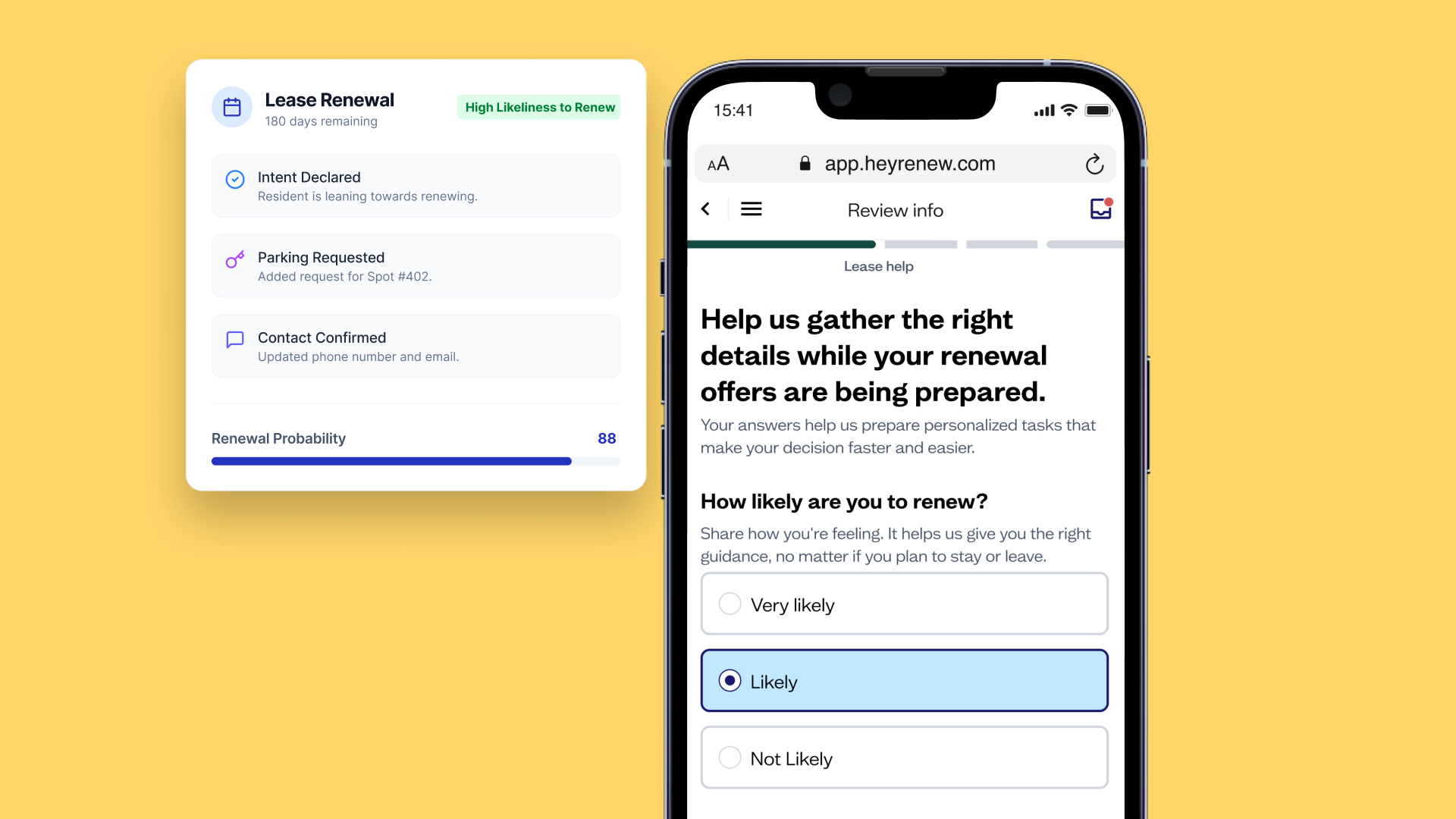
The operators seeing the strongest results are the ones creating systems that surface resident intent earlier, create better visibility across teams, and turn renewal activity into something the broader portfolio can actually plan around.
You might also like: Turning Resident Retention Ideas Into Resident Retention Strategies
Renewals as a More Meaningful Revenue Opportunity
Ancillary revenue came up a lot during the AIM discussion too.
Part of the reason is that renewals already represent a moment where residents are actively reevaluating how they want to live over the next year. They’re thinking about budget, convenience, flexibility, commute, amenities, space needs, and what they actually use day to day.
That naturally opens the door to conversations around:
- Upgraded units
- Parking
- Storage
- Pet services
- Flexible lease terms
- Premium amenities
- Furnished options
- Bundled offerings
What’s changing is how operators are approaching those conversations.
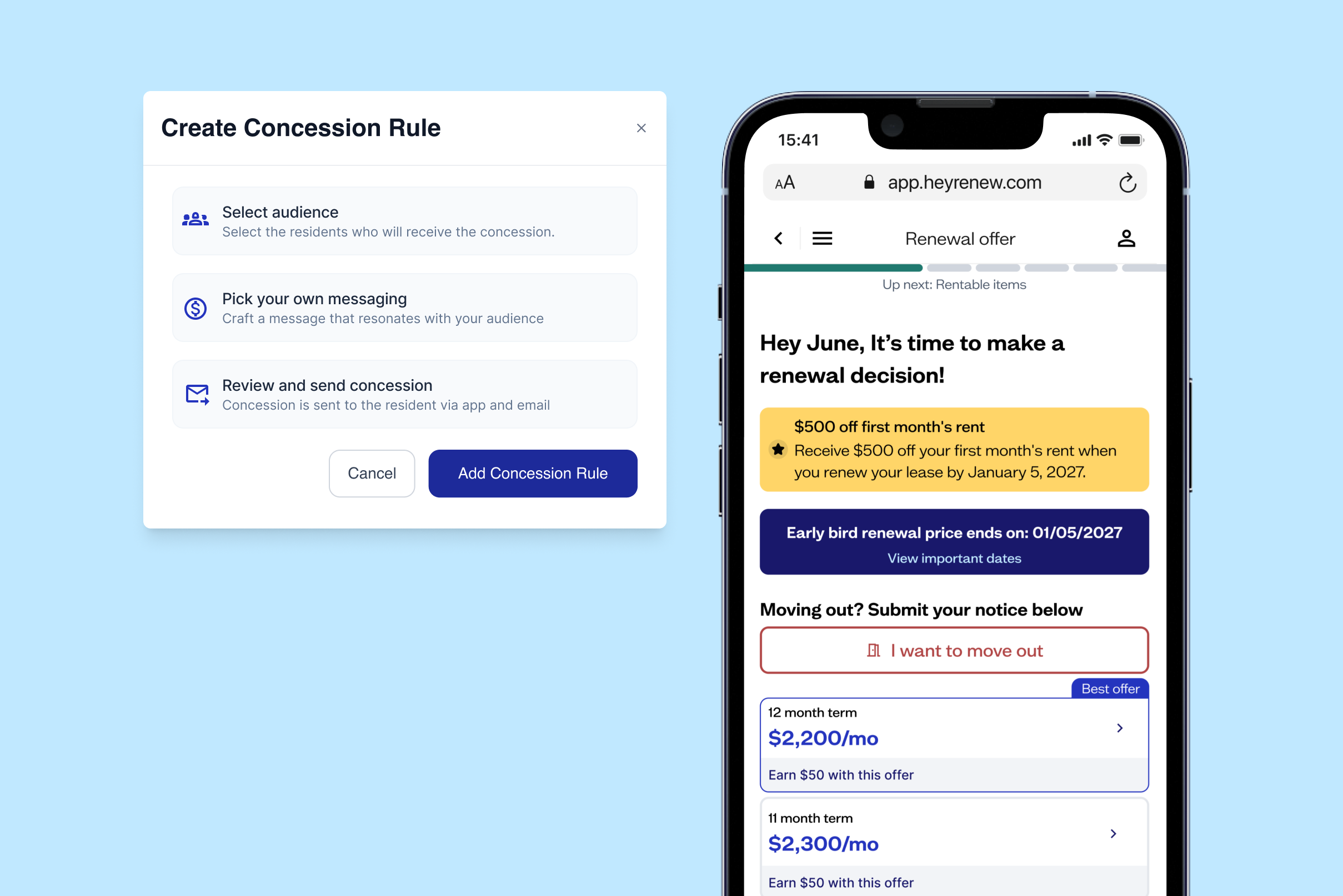
The best renewal experiences tend to make these options feel connected to the resident’s actual situation instead of introducing them as random add-ons late in the process. Timing, transparency, and presentation matter quite a bit here.
Residents increasingly expect pricing clarity and digital experiences that feel easy to navigate. When additional options are surfaced in a way that feels relevant and low-friction, they become part of the broader resident experience instead of a disconnected upsell moment.
That’s where the operational and revenue opportunity start to align.
Renewals As a Flexible Resident Mobility Strategy
This was probably the part of the conversation that generated the most energy during the session.
For a long time, retention has been treated as a simple outcome: the resident either renews their current apartment or they leave.
But residents move for all kinds of reasons:
- A roommate moves out
- A family grows
- A commute changes
- A budget shifts
- Space needs evolve
In many of those situations, the apartment may no longer fit — but the resident relationship still has value. That’s pushing more operators to rethink what happens when a resident outgrows their current space.
Instead of treating that moment purely as move-out risk, more portfolios are exploring transfers, right-sizing pathways, and internal mobility options that help residents stay within the portfolio as their needs change.
We see that behavior consistently in Renew Marketplace, where residents continue searching within the same operator network even after deciding against their current apartment.
At Renew, we often talk about the “breakage” that happens when resident relationships effectively reset every time someone moves. A resident may already have years of payment history and familiarity with an operator, then still have to restart the process entirely at another property within the same portfolio.
The portfolios leaning into resident mobility are increasingly treating continuity itself as part of the resident experience.
You might also like: When Your Best Lease Renewal Strategy Isn’t Actually Renewal
The Future of Renewals = Bigger Than Lease Execution
One thing became very clear during our AIM session: Operators are thinking more broadly about what renewal strategy can support across the portfolio.
Renewals are increasingly tied to forecasting, staffing, revenue strategy, resident mobility, and operational coordination. That reflects where multifamily operations are heading overall — to become more centralized, more connected, and more data-driven.
The strongest portfolios will treat renewals as more than a lease workflow. They’ll use them to create better visibility, stronger resident continuity, and better long-term portfolio performance.
If your team is rethinking how renewals fit into portfolio operations, explore how Renew helps operators streamline renewal strategy at scale.

.png)
.png)
.png)
.png)
.png)
.png)
.png)
.png)
%20(1).png)
.png)
.png)
.png)
.png)
.png)
.png)

.png)
.png)
.png)
.png)
.png)
.png)
.png)
.png)
.png)
.png)

.png)

.png)






.png)
.png)
.png)