.svg)

.svg)


.png)
If you've followed property management technology trends over the past few years, you've likely noticed some patterns. Every proptech platform is becoming an AI platform. Roadmaps are evolving faster than operators can evaluate them. And “all-in-one” vendors keep promising to replace half your stack.
The challenge is filtering out which proptech innovations create meaningful operational advantage, and which just add another feature to the demo. As multifamily margins tighten, that difference matters:
- National vacancy is projected to reach 8.8% by the end of 2026.
- In June, average concessions hit 11.1%, their deepest rate in over 25 years.
- Units are taking an average of 38 days to lease, making every avoidable move-out costlier.
Those pressures are changing how property management technology gets evaluated. For years, the focus was on automation and consolidation. Now, operators are asking a different question:
Not “can this tool save us time?” But "can this tool help us make better decisions?"
Today’s best proptech helps operators see around corners, prioritize the right work, and act with better information. Behavioral intelligence, purpose-built AI, and stronger data foundations are leading that shift — while open APIs and stronger integrations make it easier to add specialized technology without sacrificing a connected stack.
So, which proptech trends deserve your attention? In this guide, we'll look at the property management technology trends 2026 is bringing into focus, where operators are seeing real results, and how to separate lasting innovation from passing hype.
8 Proptech Trends in 2026 Worth Watching
1. AI proptech matures (and gets more useful).
It's difficult to find a proptech platform today that doesn't include AI somewhere in the product.
Operators are spending less time asking whether a tool uses AI and more time asking what makes that AI useful. The answer often comes down to three things:
- Access to differentiated, trustworthy data
- A natural fit within existing workflows
- Better decisions, not just faster task completion
Of course, there's still value in AI-driven efficiency. AI leasing assistants are great for qualifying leads, scheduling tours, and keeping conversations moving after hours.
But some of today’s most consequential AI applications are moving beyond task automation. Purpose-built AI proptech tools can now connect fragmented data, validate operational records, identify renewal and leasing opportunities earlier, and spot emerging portfolio trends.
Think less generating content. More uncovering insights that would’ve been difficult to find manually.
You might also like: Multifamily 2026 Outlook: 7 Mid-Year Trends Operators Should Watch
2. Behavioral Intelligence sees what chatbots can’t.
For the past few years, a big slice of proptech has focused on improving resident conversations. That’s helpful, with a catch: Conversation Intelligence only tells you what a resident chooses to say. And that’s rarely where the full story lives, especially with churn.
Weeks or even months before a resident is ready to say they're moving, the signs start showing up in behavior. Behavioral Intelligence is the next layer of proptech built to read those patterns while there's still time to influence the outcome.
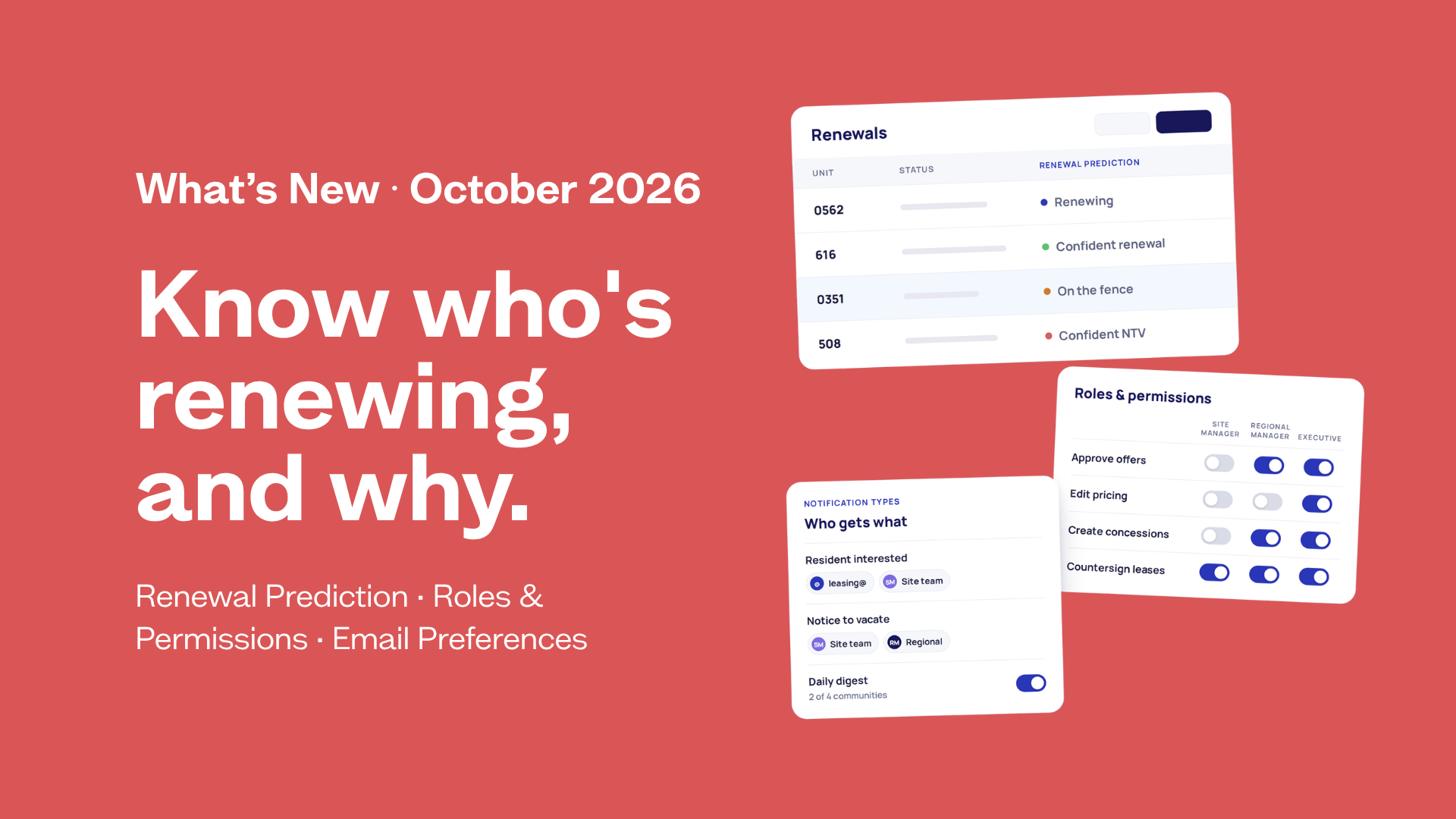
Take Resident Retention Intelligence, Renew’s behavior-based technology. It’s able to predict move-outs with 73% accuracy up to 6 months before lease end by bringing together signals like:
- Renewal offer engagement
- Resident portal activity
- Apartment and floor plan searches
- In-network transfer exploration
- Digital engagement patterns over time
Where Conversation Intelligence shows you what residents say, Behavioral Intelligence helps you understand what residents do, and what they’re likely to do next.
That visibility gives you more time and options to retain residents, whether at their current address or somewhere else in your portfolio.
3. Internet of Things (IoT) becomes part of everyday property operations.
Multifamily IoT has come a long way from installing smart thermostats and calling it a day. In 2026, connected technology is playing a bigger role in how properties themselves are run.
Devices throughout a building can give teams a better read on what’s happening in real time, automate routine tasks, and flag problems that otherwise might go unnoticed until someone reports them.
That might include:
- Energy management: Connected thermostats, lighting, and HVAC systems that help properties use less energy without making residents uncomfortable.
- Smart access: Keyless entry that makes it easier to manage access for residents, staff, vendors, and vacant units.
- Earlier maintenance alerts: Leak sensors and other connected devices that can flag a problem before someone discovers it the hard way.
The value starts to add up when you look across an entire property. A leak caught sooner can mean avoiding water damage. Remote access can save a maintenance tech a trip. And better control over heating, cooling, and lighting can reduce unnecessary energy use.
That changes the rhythm of facilities management. Instead of relying on inspections, resident reports, or something going wrong to know where attention is needed, teams get signals directly from the building and prioritize accordingly.
4. Prioritization Becomes the Next Centralization Challenge
Centralization isn't slowing down in 2026. In fact, 87% of operators in a recent survey said they plan to increase centralization over the next 12 months.
Moving work from individual properties to shared teams helped operators consolidate work and scale. But it also introduced another problem. With one centralized team supporting dozens of communities and thousands of residents, day-to-day prioritization is often an uphill battle.
Centralized teams need to know:
- Which residents deserve attention first
- Where renewal or leasing risk is building
- Which communities need support before performance slips
That's where the technology around centralization is starting to evolve. Portfolio-wide Behavioral Intelligence and AI recommendations can help identify where intervention is most likely to pay off, giving centralized teams the context to focus on the right residents, communities, and work first.
5. Smarter applicant verification takes on smarter fraud.
In 2026, rental application fraud is more organized, more scalable, and much harder to detect manually.
The numbers underscore how quickly the problem is growing. One 2026 report identified over 86,000 fraudulent renal applications in a pool of 1.46 million. And a recent TransUnion analysis estimates that bogus applications cost rental housing providers an average of nearly $1 million in bad debt.
Between AI-generated documents, “template farms,” synthetic identities, and false rental histories, the bar for applicant screening is rising. Operators are responding by strengthening verification at multiple layers of the application journey, including:
- Identity verification to confirm applicants are who they claim to be
- Document forensics to detect altered pay stubs, bank statements, and IDs
- Payroll, banking, and employment integrations that verify income directly instead of relying solely on uploaded documents
- Rental history verification to identify inconsistencies before move-in
The result is a leasing process that's more proactive, more data-driven, and much harder to game.
You might also like: The Best Lease Audit Software for Multifamily (2026)
6. Transparency becomes a proptech priority.
Renters are making big decisions based on information they find online. Pricing transparency and review verification technology is evolving to ensure they can trust what they see.
That matters on a couple of fronts:
- The FTC’s reviews and testimonials rule raises the stakes for keeping online reviews authentic and compliant.
- Local and state fee disclosure regulations are tightening, putting more pressure on operators to clearly communicate rent, fees, and renewal terms.
- Today's renters expect the same transparency they get in other industries: upfront pricing, real reviews, and total clarity on costs.
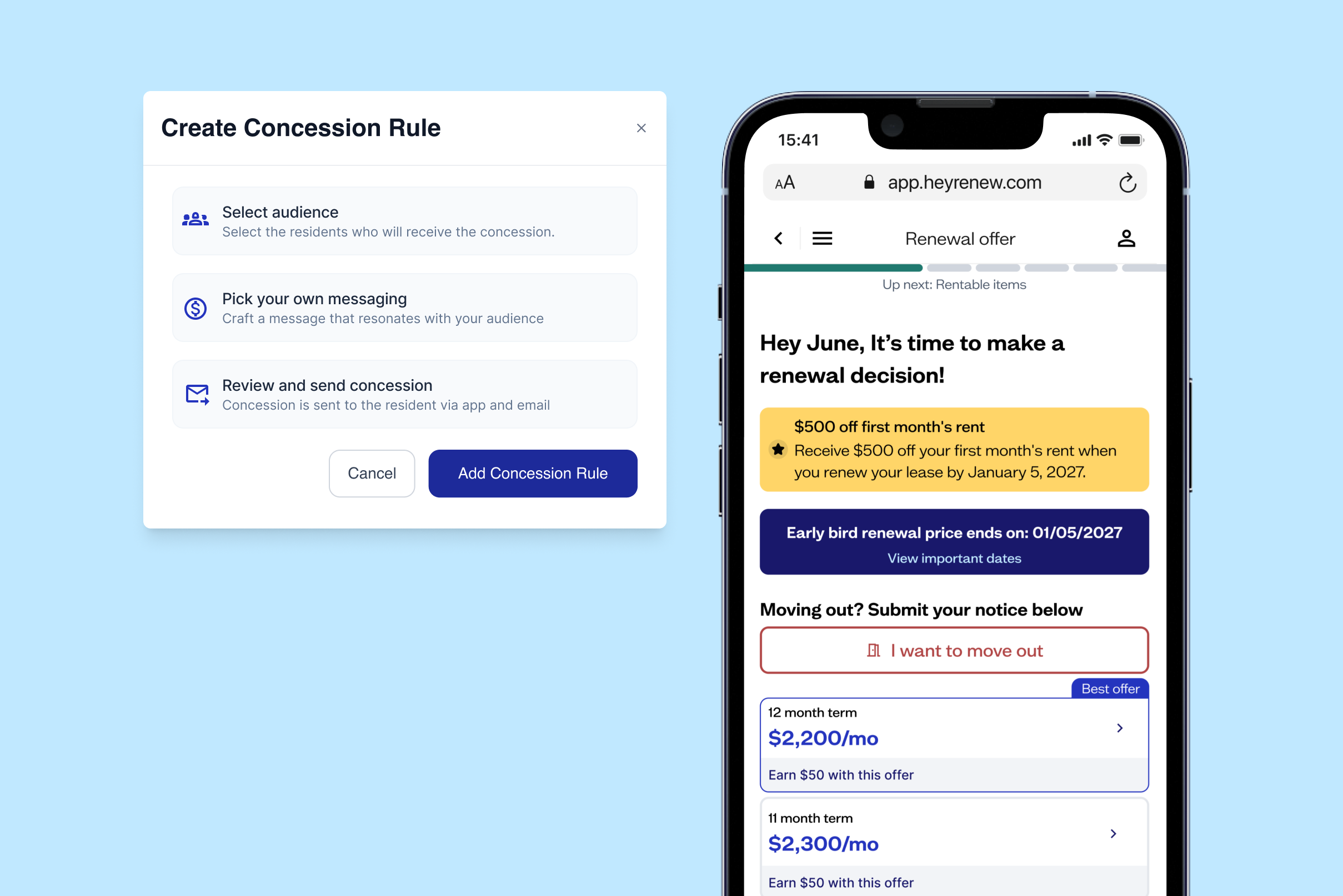
Proptech is making that transparency easier to deliver throughout the resident journey. All-in pricing tools can give renters a true picture of costs before they sign. Review management platforms help operators monitor and respond to resident feedback. And tools like Renew's All-In Renewal Pricing bring the same clarity to the renewal decision.
That creates a better foundation for the resident relationship from the start: fewer surprises, clearer expectations, and more confidence in the decisions residents are being asked to make.
7. Sustainability decisions get more data-driven.
Energy-efficient features, EV charging, and greener communities continue to influence leasing decisions. But renter demand is only part of the equation for operators, who also have to weigh energy costs, building performance, reporting requirements, and the return on each investment.
That’s where proptech is getting more useful. Energy and water management platforms, building sensors, and portfolio reporting tools give operators a much clearer view of resource use and which efficiency projects are actually delivering results.
That data can help teams:
- Benchmark energy and water use across properties
- Spot buildings or systems using more resources than expected
- Measure the results of efficiency projects
- Simplify environmental and sustainability reporting
- Decide where the next investment could have the biggest impact
The result is a much clearer answer to a pretty basic question: where is a sustainability investment actually worth making? Better data helps operators answer that property by property instead of applying the same playbook everywhere.
8. Ownership reporting goes real time.
Owners and investors increasingly expect a clearer view into what’s happening across their portfolios without waiting for the next quarterly report. That’s pushing property management technology to connect more of the operational and financial data that once lived in separate systems.
Today’s proptech is making it easier to:
- Automate ownership and investor reporting
- Share portfolio performance through up-to-date dashboards
- Connect operational data with financial results
- Deliver more frequent, data-driven updates without creating more work for onsite and regional teams
The biggest opportunity is giving ownership the story behind the numbers. For example, a renewal rate can tell you what happened — but owners also want to know what drove it, what it meant financially, and where there’s an opportunity to improve.
Renew Command is making that context easier to surface, with self-serve Impact Analyses and Ownership Digests that translate retention data into the takeaways owners and boards actually need.
One Proptech Trend Worth Questioning: Over-Consolidation
With so many property management technology trends competing for operators’ attention, consolidation has obvious appeal: fewer vendors, fewer logins, and fewer integrations to manage. In plenty of workflows, that genuinely makes life easier. The tradeoff comes when consolidation becomes the goal in itself.
A platform that does 10 things reasonably well can still leave gaps where depth matters most. Renewals are a good example: they touch pricing, communication, forecasting, retention, and NOI, but can easily become an afterthought in a platform built primarily to solve something else.
Strong integrations give operators more freedom to choose purpose-built technology where it moves the needle while still keeping data and workflows connected. So, as you evaluate your proptech stack in 2026, ask:
- What can we consolidate without compromise? Look for routine, repeatable workflows that don’t benefit from much variation or customization.
- Where can specialization create an advantage? For high-value workflows, look at what a purpose-built tool can see, predict, or do that a generalist platform can’t.
- How well does it all work together? Specialized technology only earns its place in the stack if it connects cleanly with your existing systems and doesn’t create more work for the teams using it.
The best stack is ultimately the one that gives teams the capabilities they need without making them feel the complexity behind it. That can mean consolidation in some places and deeper, purpose-built technology in others.
What It Looks Like When Proptech Goes Deep
If there’s a thread running through the proptech trends above, that the biggest opportunity in proptech is helping operators make better decisions with the data already around them.
That’s the focus of Renew’s Resident Retention Intelligence Platform. It brings together Behavioral Intelligence, predictive insights, and retention operations to help operators understand intent across the resident lifecycle.
With Renew, operators can:
- See churn coming earlier. Behavioral Intelligence identifies move-out risk up to 6 months before lease end, giving teams more time to influence the outcome.
- Know where to focus. Dynamic prioritization gives site and centralized teams a clear view of which residents need attention, why, and what retention action to take next.
- Keep residents in the portfolio. When the current apartment is no longer right, Renew surfaces better-fit options inside the operator’s portfolio, helping turn a move-out into an in-network move.
- Keep learning After the No™. Renew tracks what residents do after declining, giving operators visibility into where demand goes and where another save may still be possible.
- Connect retention to the bigger business picture. Impact Analysis and Ownership Digests translate retention performance into NOI impact and clear takeaways for operators, owners, and boards.
And Renew is designed to work inside the PMS and workflows operators already have in place. That means adding specialized depth where retention deserves it without asking teams to rip out the rest of their stack.
Resident retention is too valuable to be a side feature. When operators can see resident intent earlier, act on it faster, and keep learning after a decision is made, it becomes a more manageable lever for protecting portfolio performance.


.png)
.png)
.png)
.png)
.png)
.png)
.png)
.png)
%20(1).png)
.png)
.png)
.png)
.png)
.png)
.png)
.png)

.png)
.png)
.png)
.png)
.png)
.png)
.png)
.png)

.png)
.png)


.png)

.png)






.png)
.png)