.svg)

.svg)


.png)
Property management automation has entered a more consequential phase.
What began as workflow digitization is now operating infrastructure — shaping occupancy, timing, and revenue outcomes. By 2030, Morgan Stanley Research projects AI-enabled automation will drive $34 billion in efficiency gains across real estate, underscoring how central these systems have become to portfolio performance.
As adoption accelerates, the conversation is shifting from whether to automate to how to ensure automation creates lasting, structural advantage.
In the sections that follow, we’ll examine where automated property management is delivering value now, where opportunities to future-proof exist, and which automated workflows will help anchor your entire stack.
Where Property Management Automation Is Concentrated Today
Most property management automation investments fall into three categories: leasing, maintenance, and reporting. Each plays a clear role in portfolio performance — but each is also limited in where and when it creates impact.
Understanding those limits helps point to what a truly future-proof automation strategy requires.
1. Automated Leasing and Marketing
Automated leasing is one of the most visible shifts in property management today. Common examples include:
- AI leasing assistants and chatbots
- Self-guided tour scheduling
- Automated follow-up sequences
- CRM-driven lead routing
These tools are highly effective at the top of the funnel. They help teams capture demand and fill units quickly when demand exists. But ultimately, their impact is front-loaded.
Once a lease is signed, most leasing systems step out of the revenue conversation. Their influence peaks at move-in, even though occupancy is determined over the full lease lifecycle.
In softer or supply-heavy markets, that limitation becomes clear: filling units doesn’t prevent revenue loss later in the lease cycle.
2. Maintenance Automation
Property management maintenance automation has matured rapidly. AI-assisted work order triage, predictive diagnostics, and automated vendor coordination reduce turn times and help prevent costly emergency repairs.
This category drives measurable cost control:
- Fewer emergency calls
- Shorter make-ready cycles
- Better capital planning
- Improved resident experience that supports retention
The impact of these tools, however, remains concentrated in service delivery and expense control. Visibility into future occupancy shifts and resident decision-making typically sits outside this layer.
Maintenance automation strengthens margins. But sustaining revenue requires earlier insight into changes in occupancy and risk. That’s where automation needs to go deeper.
3. Reporting & Financial Automation
Reporting and financial automation are now standard across modern portfolios. Dashboards, automated reporting, and accounting workflows centralize data, reduce manual effort, and give leaders a clear view of performance.
But visibility isn’t the same as foresight.
These systems are inherently backward-looking. They explain what has already happened, not what is about to happen. By the time reporting surfaces rising vacancy or softening occupancy, the underlying decisions are already in motion—and often difficult to change.
Future-proof automation moves earlier. It connects reporting to forecasting, creating visibility into occupancy risk and resident decision-making before outcomes are locked in.
You might also like: Tech Stack Consolidation Checklist: 6 Questions That Protect NOI
The Proptech Automation Gap Most Operators Don’t See
Across leasing, maintenance, and reporting, automation has improved how teams execute — capturing demand, controlling costs, and clarifying performance.
Taken together, these systems form a strong operational foundation. They also share a common boundary.
Leasing is concentrated at acquisition. Maintenance operates during the lease. And reporting reflects on what has already happened.
Each contributes to performance, but none is designed to consistently influence the outcome of the lease itself — creating a gap that fuels NOI risk over time.
Where the Gap Shows Up Most Clearly
Renewal sits at the center of this proptech automation gap.
Renewal is shaped by leasing activity, resident experience, pricing, and operations, but without clear ownership, workflows often become fragmented, delayed, and difficult to coordinate.
Signals exist throughout the resident lifecycle — in service requests, payment behavior, engagement, and pricing — but they are rarely acted on early enough to influence the outcome.
By the time vacancy risk appears in a report, the decision is already in motion.
Because renewal sits upstream of vacancy, its impact compounds quickly. A single non-renewal triggers:
- Vacancy loss
- Turn costs
- Marketing spend
- Leasing labor
- Operational drag
Closing this gap requires treating renewal as its own layer of automation — one focused on protecting revenue already in place.
What a Future-Proof Automation Stack Actually Includes
Anyone can automate emails and reports. The differentiator is automation that supports the decisions shaping revenue over time.
In practice, a future-proof automation stack brings together four core layers:
- Leasing automation to capture demand efficiently
- Maintenance automation to manage operating cost
- Reporting automation to maintain visibility
- Renewal automation to stabilize occupancy and forecast risk
Embedding renewal timing and retention into the core automation stack stabilizes occupancy earlier and preserves recurring revenue. That reinforces the performance of the entire system.
As conditions shift — across supply, demand, and rent growth — systems built for speed can lose effectiveness. Systems designed for revenue durability remain resilient across cycles.
How to Operationalize It
Most portfolios already generate the data they need — across leasing activity, resident behavior, and financial performance. The challenge is acting on the right signals early enough.
A future-proof approach focuses on:
- Identifying signals that indicate renewal risk or intent
- Bringing those signals forward in the lease lifecycle
- Prioritizing action while there is still flexibility in the outcome
For example:
- Changes in engagement, service activity, or payment behavior can signal shifting intent well before notice
- Pricing and availability decisions influence renewal positioning long before formal outreach
- Portfolio-level patterns can reveal where exposure is building
When teams act on these signals earlier, they have more options — and more influence over outcomes.
Where Renew Comes In
For many operators, renewal is still the least systematized part of the stack, despite its direct impact on occupancy, timing, and revenue stability.
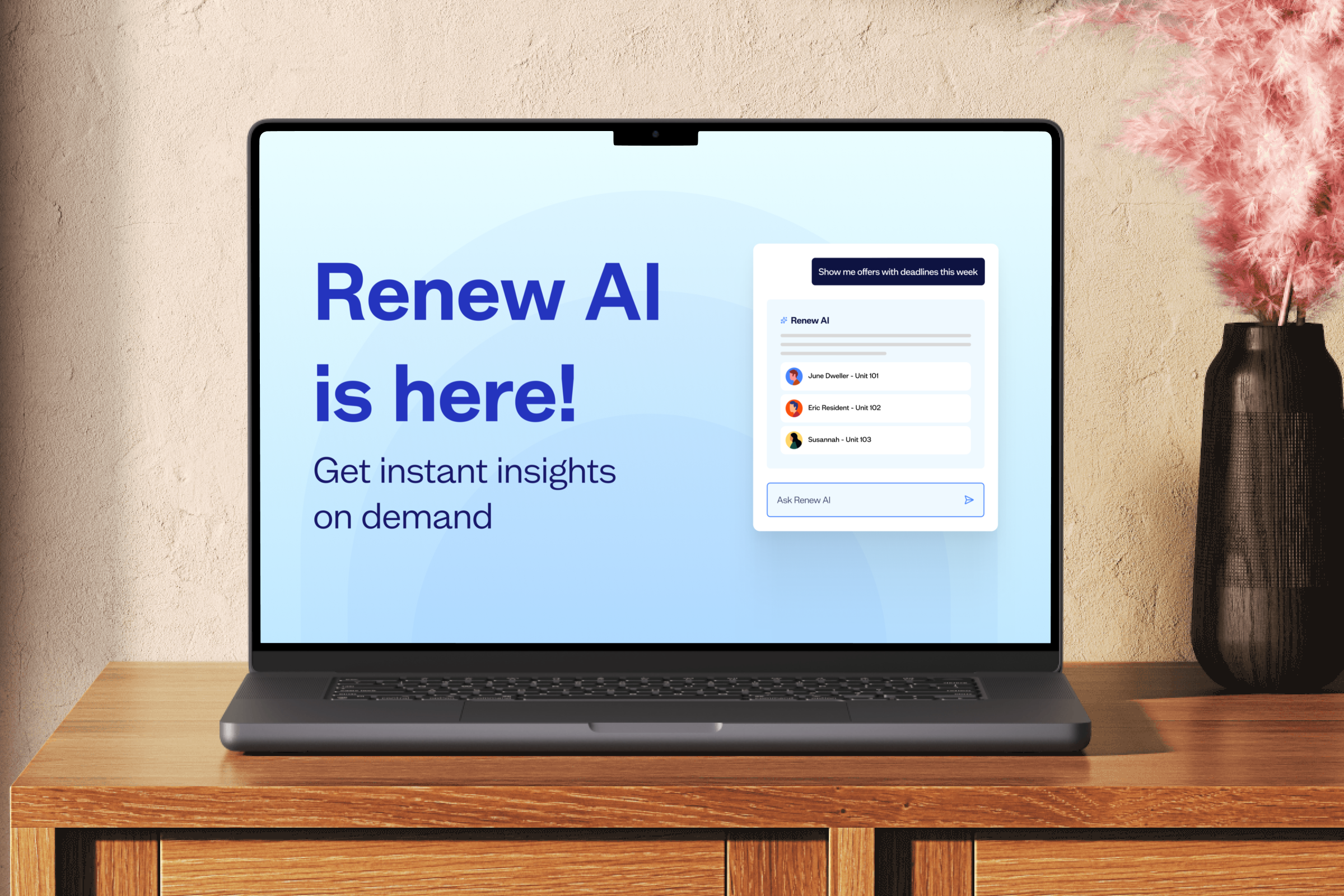
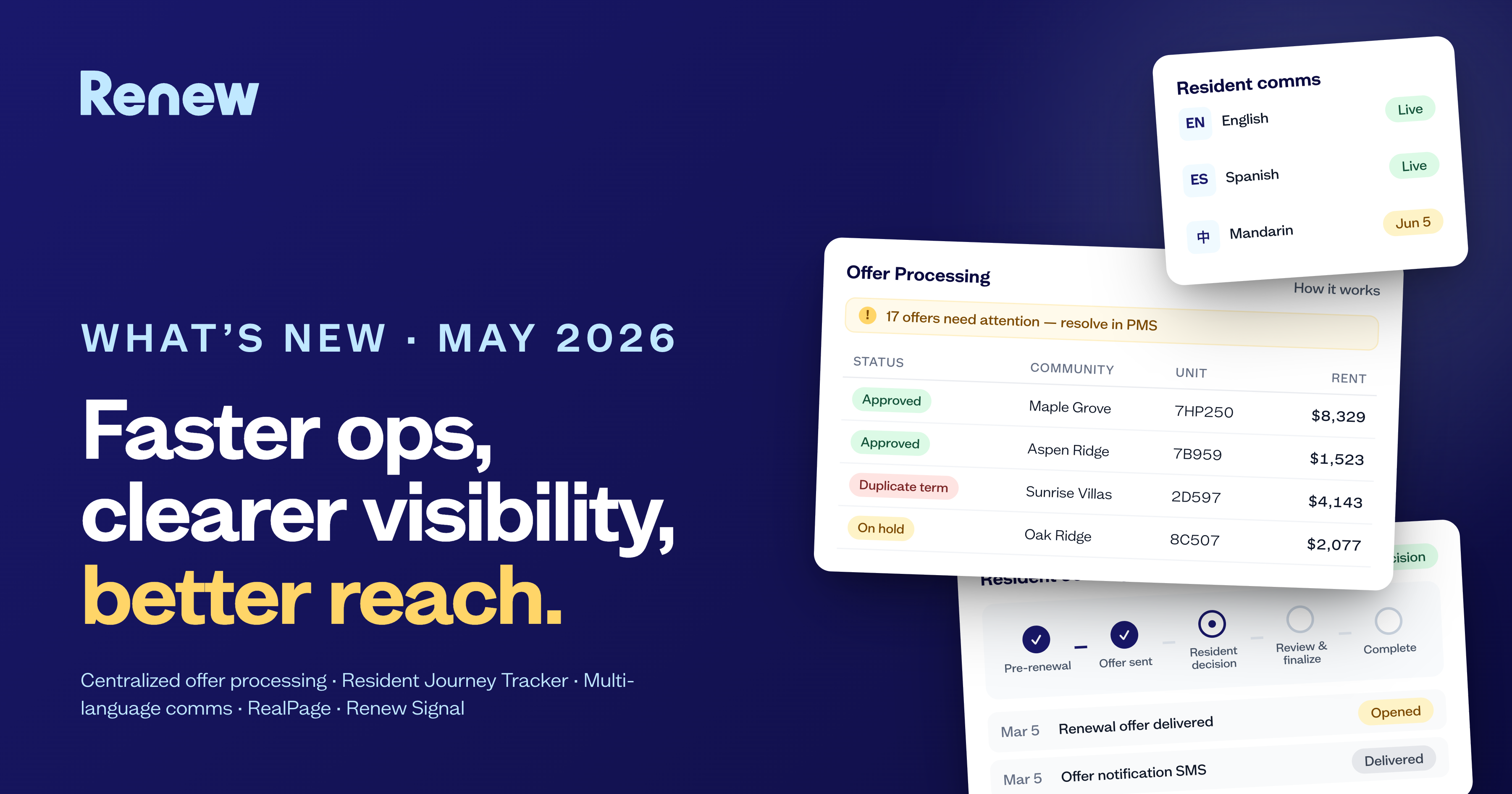
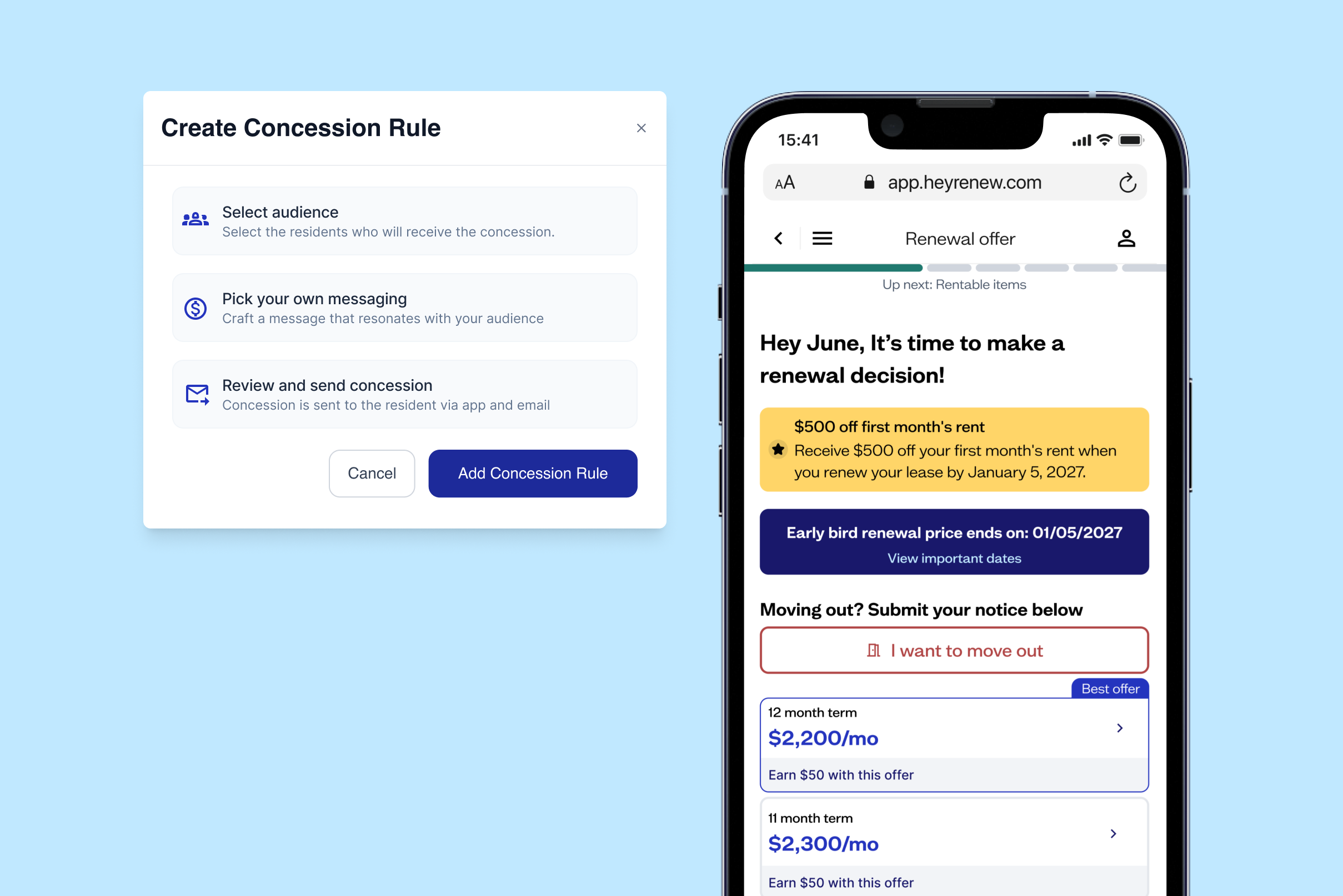
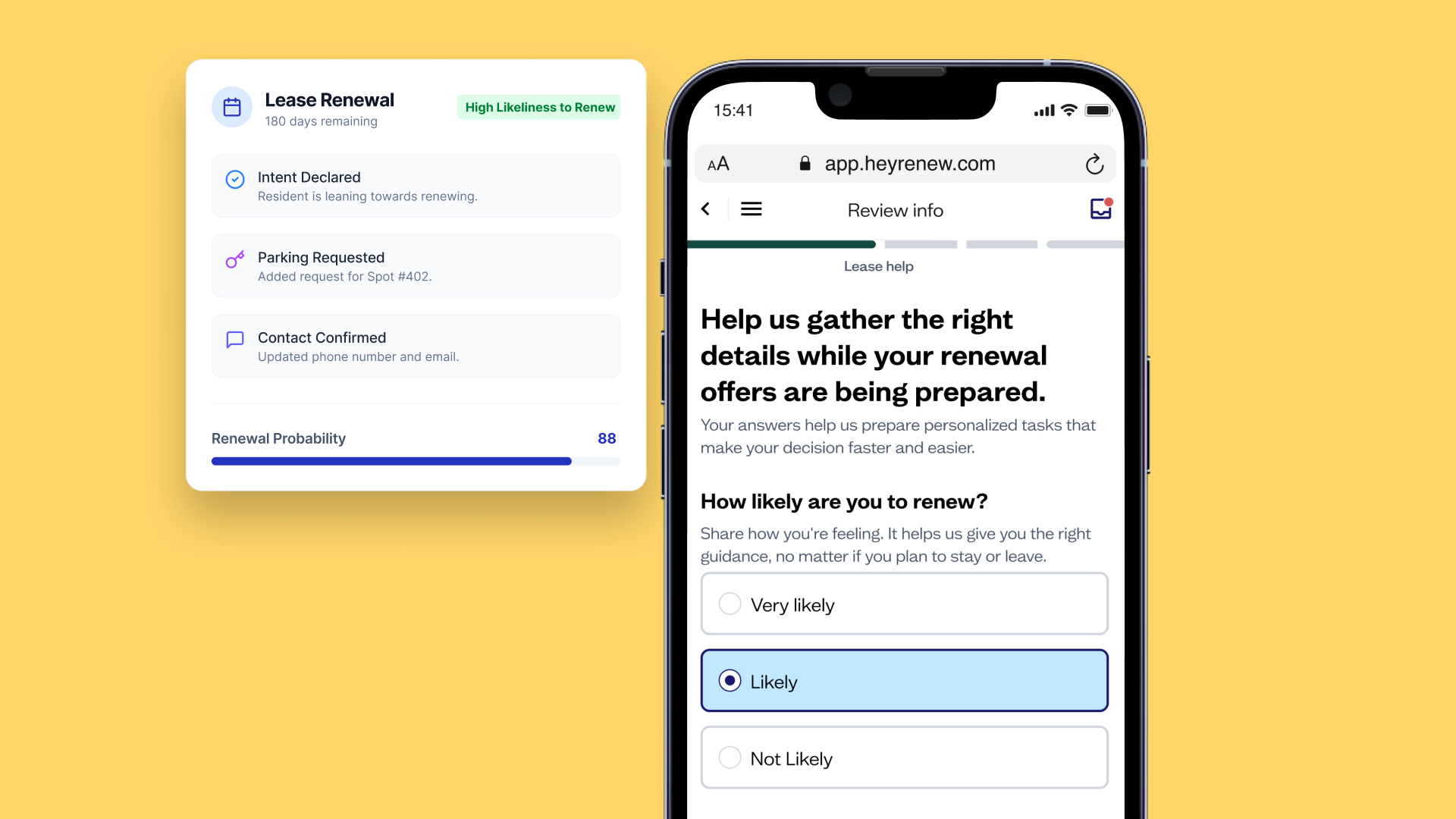
Platforms like Renew introduce earlier visibility into renewal risk and create a clearer path to act before exposure shows up in reporting.
With this approach, operators can:
→ Coordinate retention workflows across portfolios
→ Surface renewal risk while there’s still time to influence the decision
→ Reduce vacancy exposure by acting before formal notice
→ Align renewal timing with pricing, staffing, and maintenance planning
Earlier visibility into renewal decisions gives operators more control over how occupancy unfolds.
Build an Automation Stack That Pays You Back
The next phase of property management automation is defined by outcomes.
The most resilient portfolios:
- Automate renewal decisions as rigorously as leasing
- Treat retention as a core function
- Use forecasting to guide action, not just report results
Automation should do more than make work faster. It should make performance more predictable.
If your stack is optimized for activity, Renew helps balance it with outcome-driven intelligence. Get in touch to start future-proofing your automation stack today.

.png)
.png)
.png)
.png)
.png)
.png)
.png)
.png)
%20(1).png)
.png)
.png)
.png)
.png)
.png)
.png)
.png)

.png)
.png)
.png)
.png)
.png)
.png)
.png)

.png)
.png)

.png)

.png)






.png)
.png)
.png)