.svg)

.svg)


.png)
We’ve entered a different operating environment than the one most multifamily proptech was built for:
→ Vacancy could hit 8.8% by December.
→ Rents are flat — or falling — YoY in many markets.
→ Concessions are sitting at a 10-year high.
→ The average turn costs ~$4,000 before vacancy loss.
Margins are tight, and that makes every resident matter more. Yet resident retention — today’s biggest NOI driver — is something many operators still have to wing.
Sure, events and surveys can give you a pulse. But most operators don’t get meaningful signals on a resident’s intent until the renewal offer goes out. By then, the resident has had weeks or even months to shop around and make plans.
That’s the problem with retention that hinges on a single moment. It misses the fact that resident decisions are a process — and processes leave clues long before they conclude.
To read those clues, multifamily doesn’t need more conversation intelligence. It needs better behavioral intelligence.
Behavior Starts Talking Before Residents Do
The last few years have been a race to automate resident communication. Faster emails. Smarter chatbots. More personalized messaging.
None of that's a bad thing. But conversation intelligence can’t tell you who's quietly shopping, who's already made up their mind, and who's still reachable if you act now.
Because residents don't usually announce ahead of time that they're leaving. They show you.
A resident up for renewal in a few months might:
- Browse other floorplans and prices "just to see what's out there."
- Revisit leasing information several times over a few weeks.
- Give less positive feedback than they did earlier in the year.
- Go from never exploring available units to checking them every few days.
All of those behaviors are intent signals. And they point to drift well before renewal talks ever take place.
Conversation intelligence still has its role in the story. But behavioral intelligence is how you fill in the chapters most operators never get to read — by surfacing what residents do, and what they’re likely to do next.
That’s what we've been building into our operator experience at Renew for over a year.
We call it Resident Retention Intelligence. It’s a new category of multifamily intelligence that gives operators an end-to-end, actionable view of resident intent, from the first signs of drift through renewal and After the No™.
How Resident Retention Intelligence Helps Operators Change Outcomes
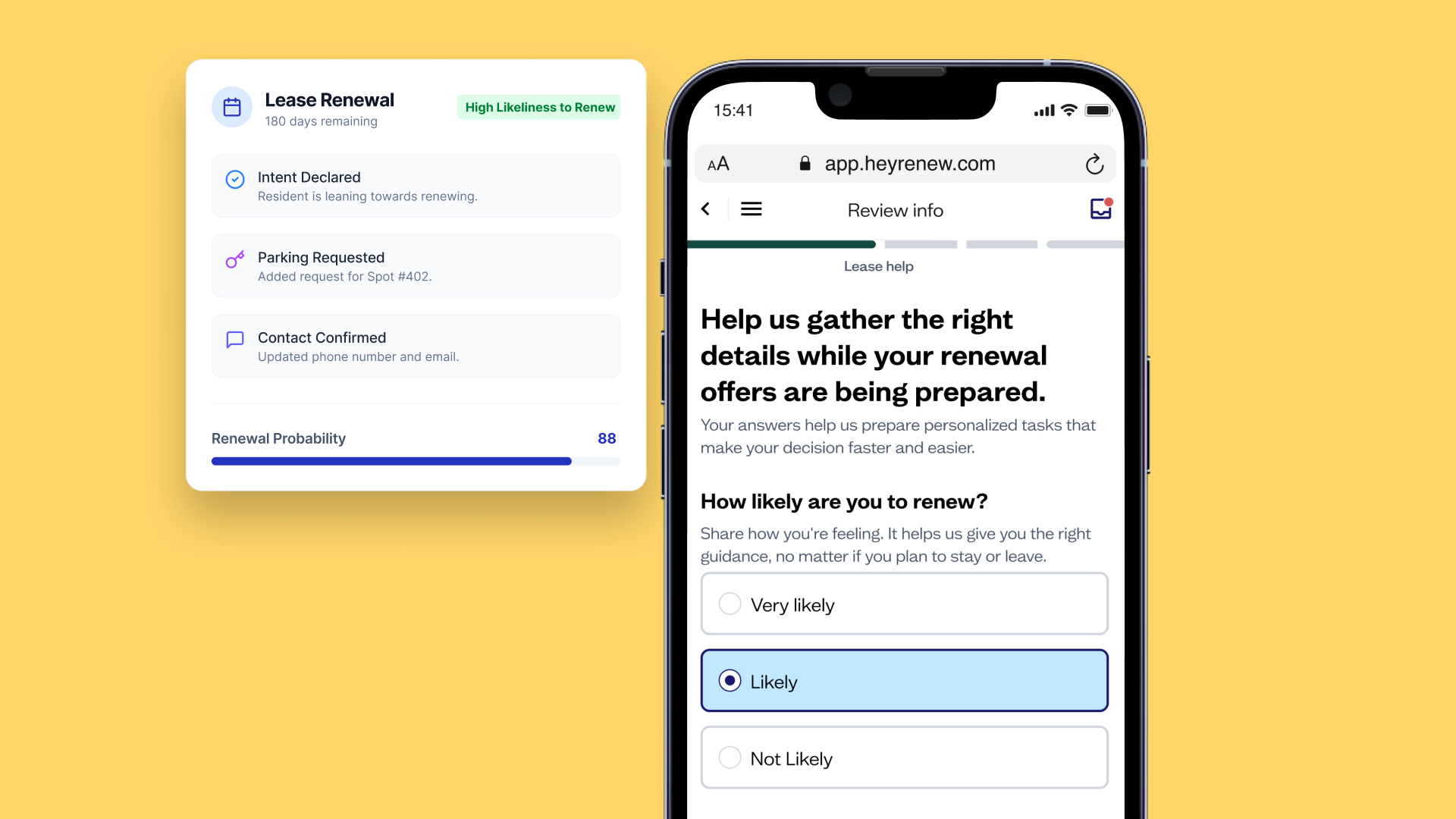
By capturing the behavioral signals already hiding in your PMS, Resident Retention Intelligence predicts renewal intent earlier than anywhere else in multifamily.
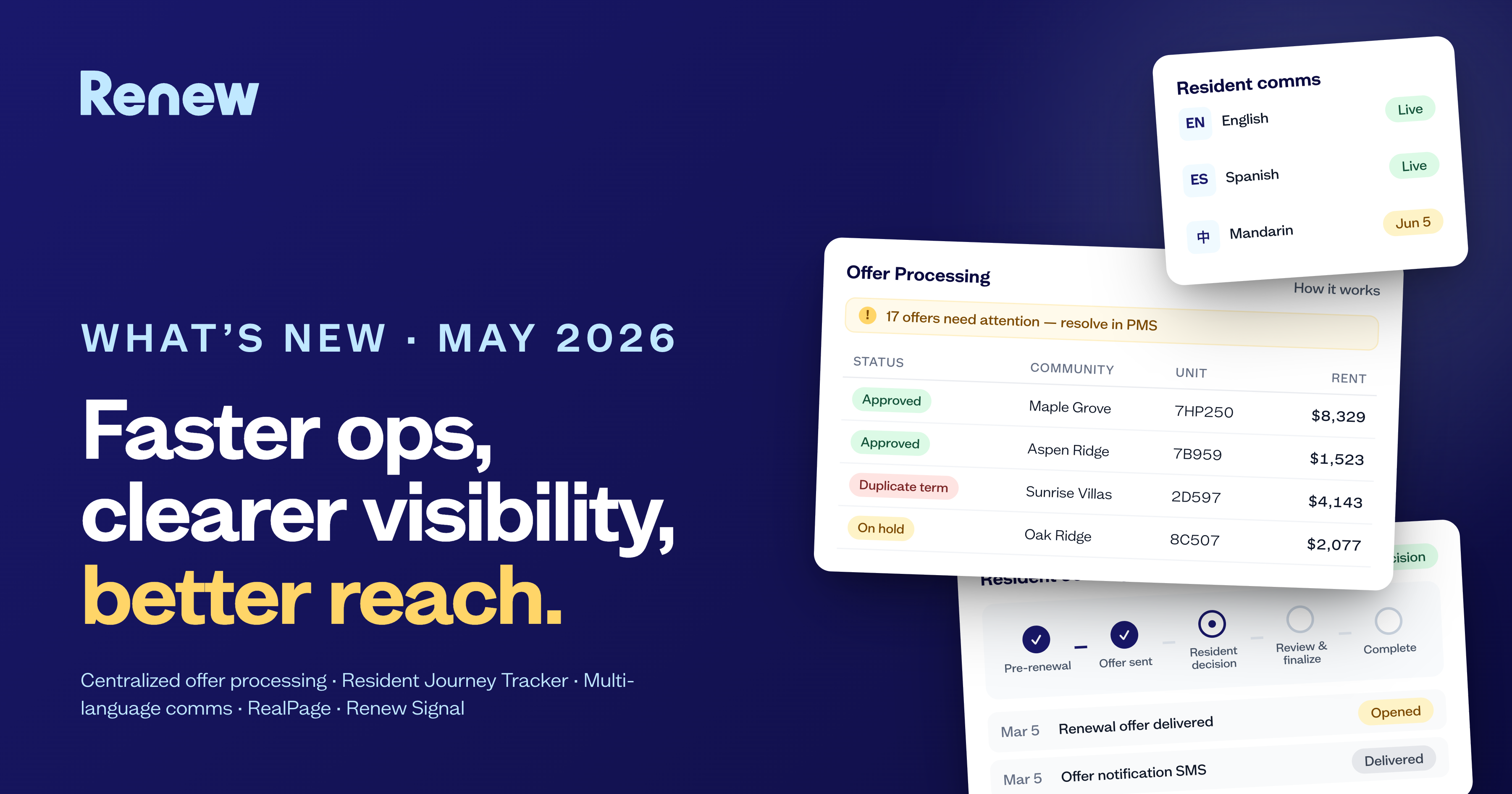
Then, that intelligence flows directly into the industry's only proactive renewal pipeline — bringing pricing, approvals, concessions, transfers, follow-up, and ownership reporting into one connected workflow.
With churn risk surfaced up to 6 months before lease end, operators can spend less time reacting to renewals and more time influencing them.
Start turning resident behavior into retention action →
Know which residents need you first.
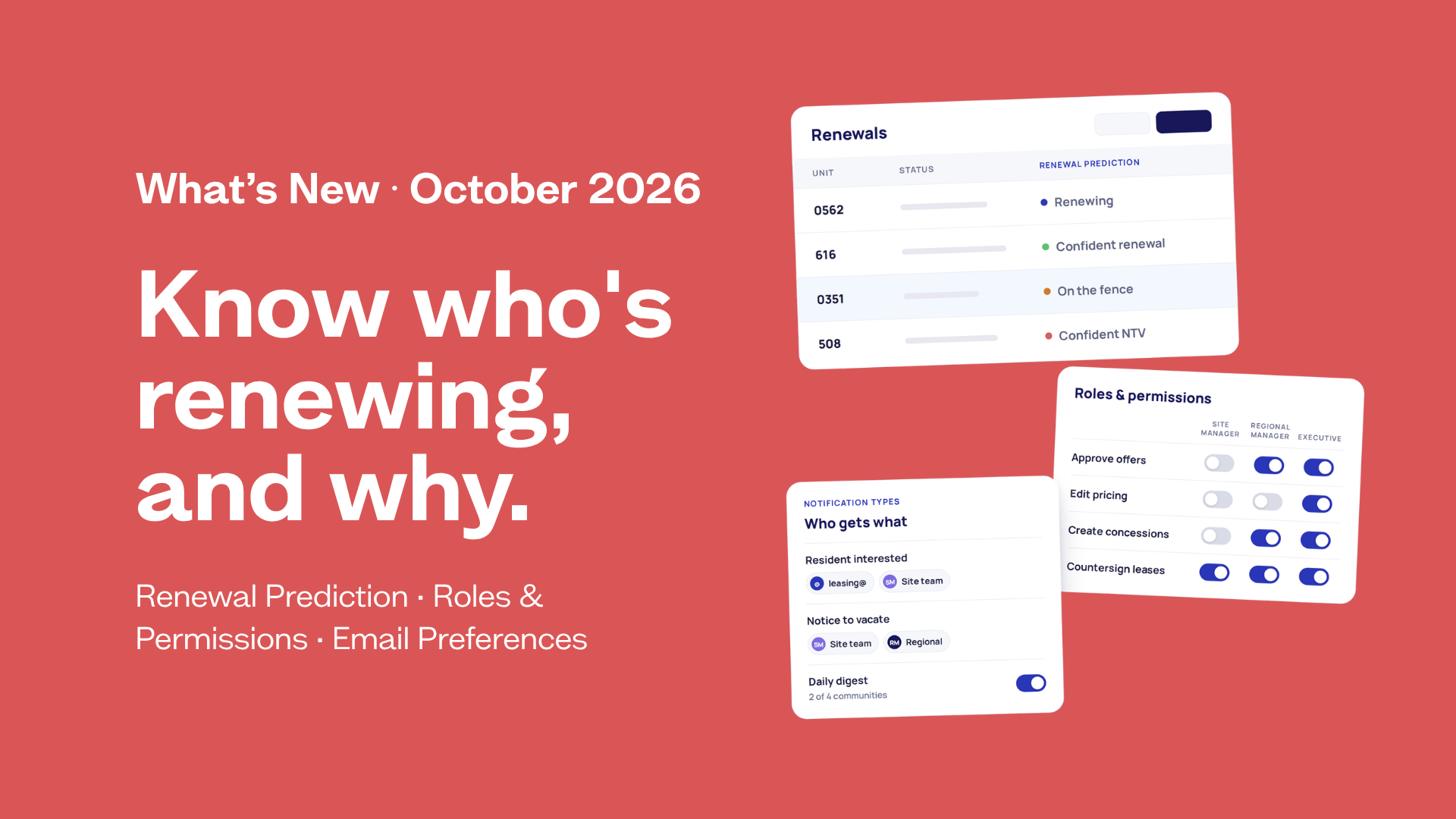
Renew turns declared intent, engagement, and satisfaction signals, Marketplace activity, renewal behavior, and operational data into one Propensity-to-Renew Score — giving operators a continuously updated pulse on every resident.
That changes how teams spend their time. Instead of treating every renewal the same, they start each day with a prioritized action list that tells them who to engage, when, and why.
Because “call these five residents first" is infinitely more valuable than another report explaining why retention was down last month.
Give every team the same playbook.
Early visibility is only half the job. Acting on it consistently, across every property, is the other half.
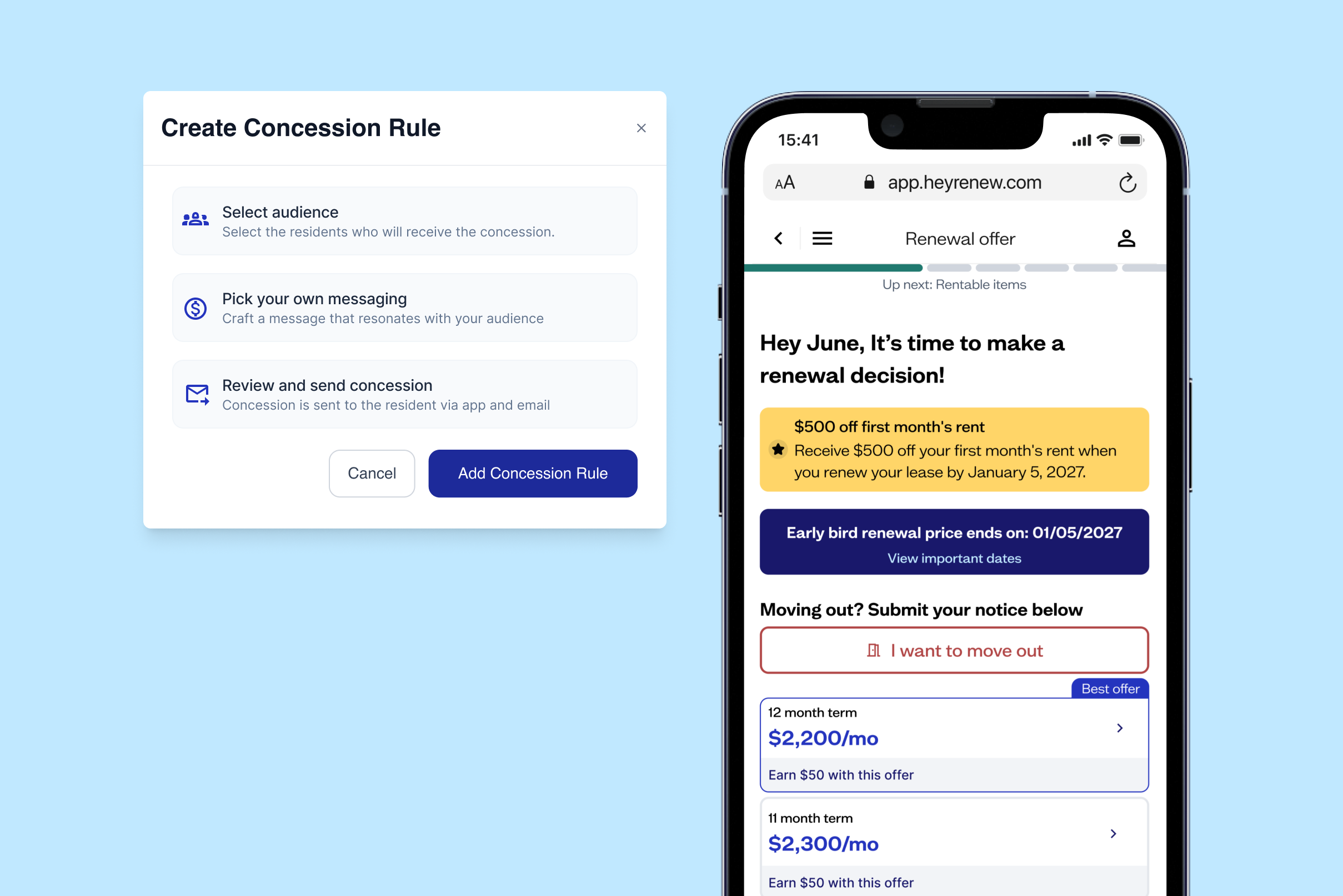
With dynamic pricing, offers, approvals, concessions, and follow-up in one shared workflow, everyone works from the same source of truth. No more chasing updates across spreadsheets or reinventing the process at every property.
And because compliance isn't optional, neither is the technology behind it. State-specific compliance and fee transparency are built into our renewal operations — not bolted on after.
Keep more residents in your network.
Not every resident will want to stay in the exact apartment they're in today.
Sometimes the issue is price. Sometimes it's space. Sometimes, life just changes.
Renew helps operators recognize those moments earlier and proactively guides residents toward better-fit homes within the portfolio — so teams have another chance to retain demand before it leaves the network altogether.
Give leadership the whole story.
Saving more residents is important.
Being able to explain why you saved more residents — and what it was worth — makes retention a long-term strategy.
Renew’s board-ready Ownership Digests and Impact Analysis link interventions to outcomes. With self-serve reporting, custom analytics, BI exports, and retention tracked in dollars, operators can prove what worked instead of hoping the numbers speak for themselves.
How Resident Retention Intelligence Keeps Working After the No™
Most leasing software treats a declined renewal like the last page of the story. The workflow closes, reporting updates, and everybody moves on.
We think that’s one of the industry’s biggest blind spots.
Resident Retention Intelligence keeps learning after the decision — tracking Marketplace searches, offer views, upgrade interest, timing signals, and whether demand stayed in-network or went elsewhere.
Because declined doesn’t mean disappeared. In 2026, declining residents have performed 110,000+ Marketplace searches inside Renew — and counting. They continue actively comparing units, floor plans, and pricing at an engagement rate similar to residents who renewed.
Every action they take leaves behind another clue:
- Which residents could have been saved with a different option?
- Where does demand go when it leaves your portfolio?
- What price points and floor plans consistently pull residents away?
- Which submarkets are attracting your move-outs?
Those aren't questions most operators have ever had the data to answer.
But with After the No™, every NTV becomes another opportunity to understand what residents were looking for, where demand moved, and how to keep more of it next time.
Those insights don't just improve retention — they can strengthen pricing, marketing, portfolio strategy, and future investment decisions, too.
The Next Competitive Advantage Isn't Another Chatbot
Operators don't win by sending more messages. They win by knowing what residents are likely to do before a renewal decision is made — and acting early enough to change the outcome.
Resident Retention Intelligence adds a PMS-compatible layer of behavioral intelligence that helps operators recognize intent sooner, respond more strategically, and make every renewal season a little smarter than the last.
Across the Renew platform, that approach has already translated into measurable results:
- 90+ additional days after first signal for teams to influence decisions.
- 67.8% of renewal decisions happen 60+ days before lease end.
- 70% of resident decisions happen without intervention needed.
- 30 hours of manual renewal work saved every month, per property.
- 65.2% average renewal rate with Renew versus ~55% nationally.
Resident Retention Intelligence isn't about predicting the future for the sake of predicting it. It's about giving operators both a bigger window and the tools to influence it.

.png)
.png)
.png)
.png)
.png)
.png)
.png)
%20(1).png)
.png)
.png)
.png)
.png)
.png)
.png)
.png)

.png)
.png)
.png)
.png)
.png)
.png)
.png)
.png)
.png)
.png)

.png)

.png)






.png)
.png)
.png)