.svg)

.svg)


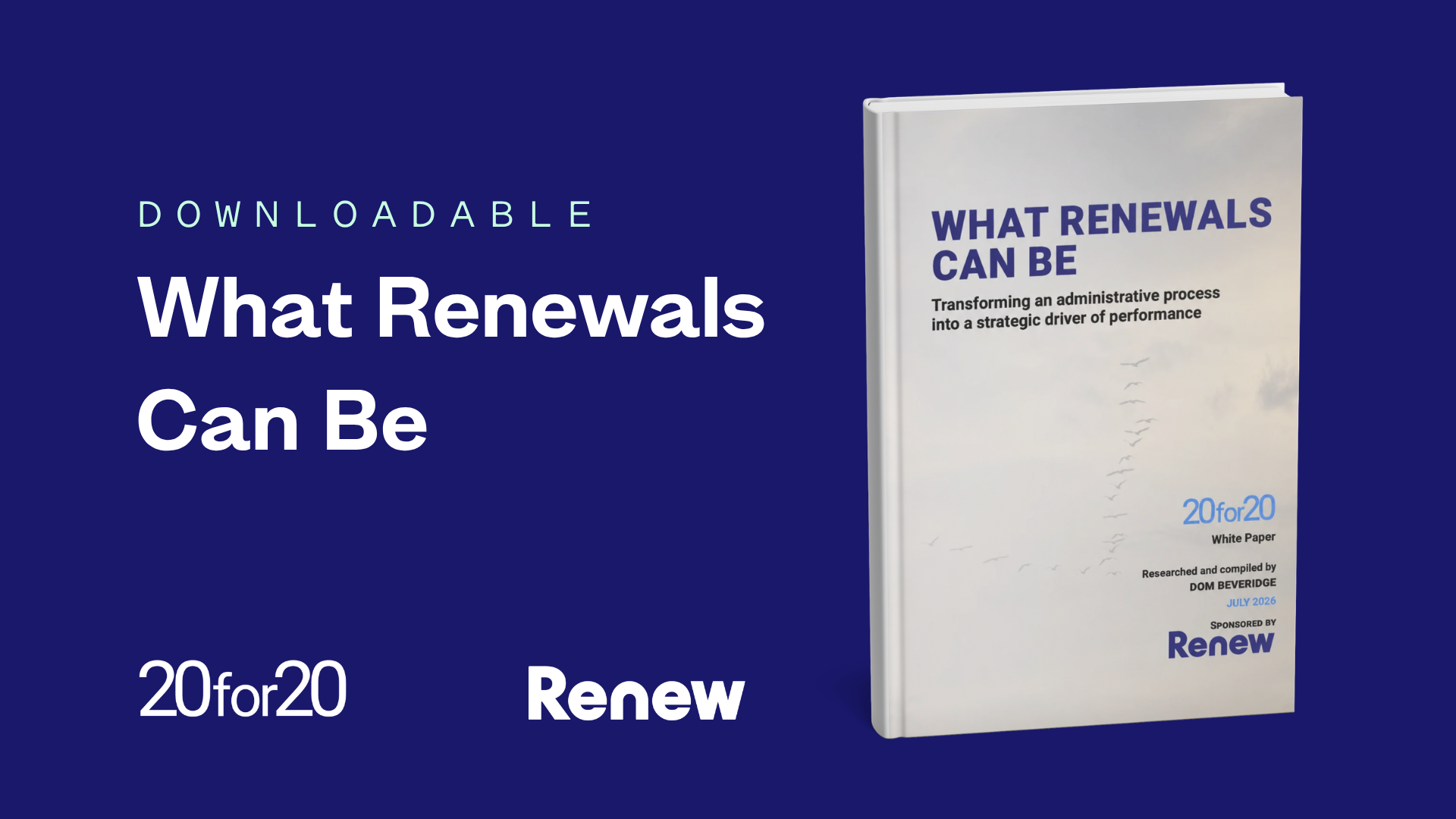
We recently had an amazing opportunity to work with multifamily technology expert Dom Beveridge and 20for20 on a new research paper about a topic very close to our hearts: what renewals could look like if the industry treated them as a strategic driver of performance instead of another onsite administrative task.
Full disclosure: Renew sponsored the research. But the findings, perspectives, and conclusions are Dom’s, informed by independent research and conversations with multifamily leaders at KETTLER, Gates Hudson, and Pillar Properties. We’re sharing it because we believe the paper captures an important shift already happening across the industry—and one worth paying attention to.
The premise is simple: More than half of multifamily revenue comes from residents who already live in the building. Yet operators have historically invested far more time, technology, and attention into acquiring new residents than retaining the ones they already have.
We’ve built sophisticated leasing funnels. We track every lead, tour, application, and conversion. We optimize websites, automate follow-up, and carefully measure the cost of every new lease.
Renewals? In many organizations, they’re still managed through spreadsheets, inboxes, printed letters, and the heroic follow-up efforts of already-overextended onsite teams.
That imbalance is exactly what What Renewals Can Be: Transforming an Administrative Process into a Strategic Driver of Performance explores.
The renewal problem isn’t always the offer
When residents wait until the last possible moment to make a decision, it’s easy to assume they’re rejecting the price or planning to move.
But often, they simply haven’t been given a compelling reason or an easy way to decide.
Traditional renewal processes introduce friction at nearly every step. Residents may need to schedule a conversation, track down information, compare confusing options, or wait for someone onsite to answer a question. Meanwhile, teams are manually managing follow-ups alongside tours, maintenance issues, resident requests, and everything else happening in the leasing office.
The longer a decision takes, the less time the operator has to prepare for a potential move-out, market the unit, and avoid vacancy loss.
This white paper explores how operators are removing that friction through structured workflows, centralized ownership, and time-based pricing.
Across a sample of 175,000 renewal offers, residents receiving time-based pricing made their decisions in an average of 21 days, compared with 29 days for residents receiving conventional offers. They also renewed at a higher rate: 65.4% compared with 62.7%. Earlier decisions didn’t come at the expense of retention. They created greater urgency, clearer expectations, and more time for operators to act on the outcome.
From property task to enterprise capability
Of course, improving renewals at one property is very different from improving them across an entire portfolio. When each community manages renewals differently, leaders can see the final renewal rate, but they can’t always see what caused it. Was the property dealing with a genuine market challenge? Were offers sent late? Did pricing approvals stall? Were resident questions left unanswered? Did the team follow up consistently?
Without a shared process, performance conversations are often based on anecdotes and averages. Standardized renewal workflows give operators a common operating picture across the portfolio, making it easier to identify risks, compare performance, enforce policies, and understand exactly where the process is breaking down.
That visibility is becoming even more important as operators centralize work and navigate increasingly complex notice requirements, pricing rules, and fee-transparency regulations.
The decision is only the beginning
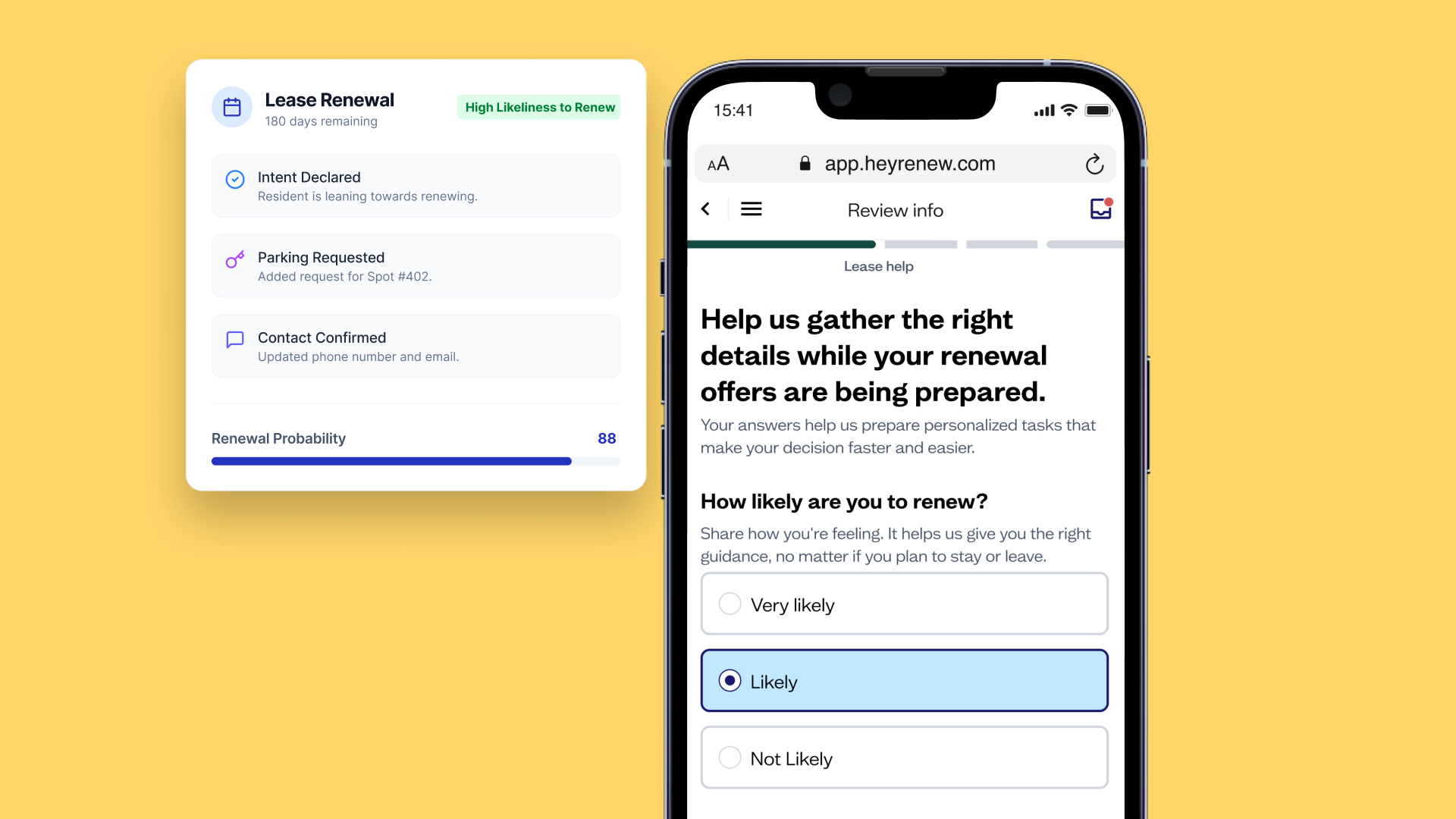
A digital renewal process also generates something the industry has historically lacked: a clearer view of resident intent. Every interaction tells us something. Did the resident open the offer? Which pricing options did they explore? Where did they hesitate? Did they ask about transferring to another unit? Did they disengage entirely? Together, these behaviors create a much richer picture than a simple “renew” or “move out” recorded in the PMS.
That insight can help operators identify at-risk residents earlier, focus teams’ time where it can make a difference, and better understand the real reasons residents leave, and when a resident does say no, the opportunity doesn’t necessarily end.
A resident who is leaving one property may still be a great fit for another community within the portfolio or a broader referral network. Instead of allowing that demand to disappear into an ILS, operators have an opportunity to preserve the resident relationship, reduce acquisition costs, and learn what the resident actually does next.
That is a fundamentally different way to think about retention.
Renewals don’t have to be an administrative event that happens shortly before lease expiration. They can become a measurable, portfolio-wide operating capability that improves forecasting, reduces uncertainty, creates new revenue opportunities, and delivers a better experience for residents.
The industry already knows how to build sophisticated systems around important decisions.
It’s time renewals received the same treatment.
.png)
.png)
.png)
.png)
.png)
.png)
.png)
.png)
%20(1).png)
.png)
.png)
.png)
.png)
.png)
.png)
.png)

.png)
.png)
.png)
.png)
.png)
.png)
.png)
.png)
.png)
.png)

.png)

.png)






.png)
.png)
.png)