.svg)

.svg)


.png)
Few industries manage demand uncertainty as deliberately as airlines.
Every flight comes with a long list of unknowns, from when passengers will book and what they’ll pay to how many even show up at the gate. So, the industry learned to shift — building sophisticated ways to adjust pricing, inventory, and offers as demand unfolds.
That discipline worked. Globally, the airline sector is projected to net a record $41 billion in 2026, even with supply chain issues limiting aircraft deliveries.
Why should this matter to multifamily operators? Because at renewal, residents behave a lot like airline passengers. They weigh their options before committing, shop alternatives, and decide whether to add services or amenities (“Should I pay for extra leg room?” → “Should I finally pay for parking this year?”).
Here’s where the parallel starts to diverge, though:
Multifamily tends to treat renewal like an administrative box to check. Airlines treat the same moment — the point where a customer decides — as the center of their revenue strategy. Here’s what we mean by that.
Why Airlines Offer a Useful Blueprint for Multifamily
At first glance, airlines and multifamily seem like very different businesses. Structurally, though, they share a few important characteristics:
- Perishable inventory. Once a plane departs or a lease expires, the revenue opportunity tied to that seat or unit disappears.
- Time-bound purchasing decisions. Passengers decide when to book before departure; renters decide whether to renew within a defined window before lease expiration.
- Demand uncertainty. In both industries, operators are estimating when demand will appear, how price-sensitive customers will be, and what alternatives they might consider.
Multifamily has already borrowed one idea from the airline playbook: yield management, the discipline that later evolved into modern apartment revenue management.
In both industries, pricing became the first tool for managing demand. But airlines didn’t stop there. They built operating habits around the entire customer decision process — some of which translate surprisingly well to multifamily.
You might also like: What Multifamily Can Learn from Subscription-Based Brands
Lessons Multifamily Can Borrow From the Airline Industry
Over time, the airline industry has developed operating systems that shape how customers evaluate options, commit, and generate revenue across limited inventory.
When you look closely at how those systems work, a few patterns start to stand out:
Lesson 1: Airlines Don’t Sell Seats. They Manage Decisions.
Airlines rarely present a single offer and wait.
Instead, they guide customers through a sequence of choices:
Search → compare → select → upgrade → confirm.
Each step helps passengers narrow their options and move closer to a decision. Pricing, seat availability, and add-ons appear at specific points along the journey, encouraging customers to commit before their flight.
The experience is structured, so the passenger rarely has to decide all at once.
Takeaway for Multifamily Operators
Renewal decisions unfold in a similar way. Residents review their offer, compare other apartments, talk through options with roommates or partners, and weigh how their needs might change over the coming year.
Systems that support the full decision journey — from the initial offer to the final signature — tend to convert more renewals, because they reflect how decisions actually unfold.
Lesson 2: Airlines Make Significant Revenue After the Ticket Is Purchased
For airlines, the base fare is only part of the revenue picture.
Ancillary products like baggage fees, seat upgrades, priority boarding, and in-flight purchases generate billions of dollars in additional revenue each year. In many cases, these services are presented while the passenger is already in the purchasing process.
Instead of treating the ticket purchase as the end of the transaction, airlines use the moment of commitment to introduce additional options.
Takeaway for Multifamily Operators
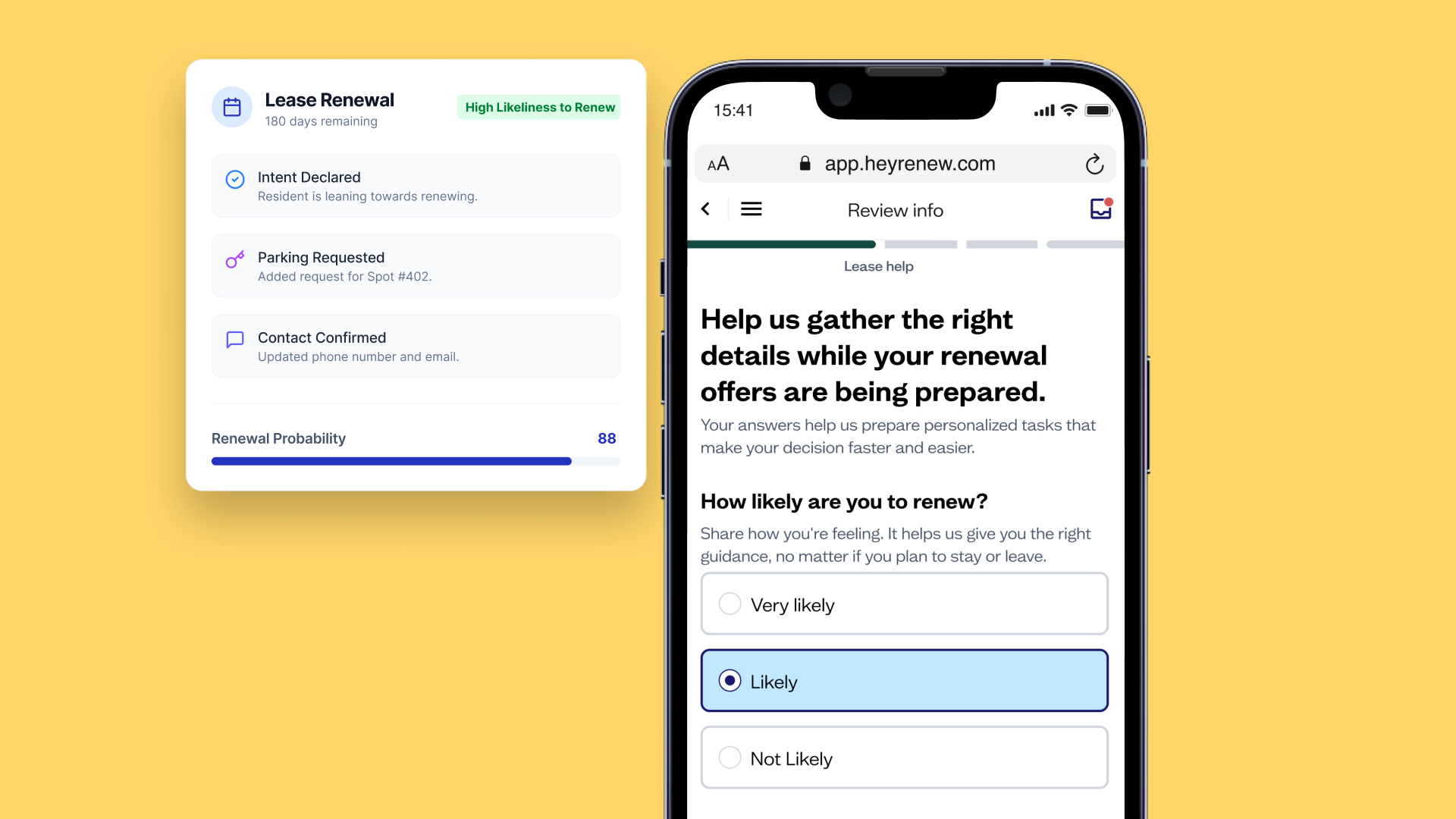
Lease renewal creates a similar opportunity. As residents decide whether to stay for another term, operators can surface additional services and add-on fees: parking, storage, renters insurance, or amenity access.
When those options appear during the renewal process, they become part of the same decision — not a separate purchase introduced later.
Download the free guide: Fee Transparency in Multifamily: What Property Managers Need to Know for 2026
Lesson 3: Airlines Optimize Flights. Multifamily Watches Averages.
Airlines rarely manage revenue using system-wide averages.
Instead, they evaluate each flight individually — analyzing demand patterns, booking pace, remaining inventory, and route behavior. Every flight effectively becomes its own micro-market.
This level of visibility allows airlines to adjust pricing and availability continuously as demand signals evolve.
Takeaway for Multifamily Operators
Renewal decisions also unfold at a much smaller scale than portfolio averages suggest. Each household is its own micro-market, with different timing, constraints, and alternatives under consideration.
Visibility into which residents have viewed offers, which households are close to deciding, and which renewals are stalled gives operators far more actionable insight than portfolio-level averages.
Lesson 4: Airlines Use Time to Shape Demand
Airline pricing frequently changes as departure approaches.
Passengers who book early often receive lower prices, while those who wait longer typically pay more. This approach encourages earlier decisions while helping airlines manage remaining inventory as the departure date nears.
In other words, time itself becomes part of the pricing strategy.
Takeaway for Multifamily Operators
Renewal decisions happen within a defined window before lease expiration. When pricing and incentives remain static during that period, many residents wait until the final days to decide.
Time-based incentives or pricing adjustments can encourage earlier commitments and improve visibility into upcoming vacancies.
Lesson 5: Airlines Make Alternatives Visible
Airlines regularly present passengers with alternative options:
- Earlier flights
- Later departures
- Nearby airports
- Different seat classes
Instead of forcing passengers to leave the system to explore options, airlines keep those choices within the same ecosystem.
Takeaway for Multifamily Operators
Most residents move for practical reasons: a larger unit, a lower rent, or a different location. When those alternatives exist within the same portfolio but never appear during the renewal conversation, the resident may leave the ecosystem altogether.
Showing those options earlier keeps the decision inside the portfolio — turning a potential move-out into an internal transfer opportunity.
Lesson 6: Airlines Treat Loyalty as Infrastructure
Airlines invest heavily in loyalty programs because they extend the customer relationship beyond a single flight.
Frequent flyer systems reward repeat behavior, increase switching costs, and encourage passengers to remain within the airline’s network over time.
Takeaway for Multifamily Operators
Renters may change addresses, but the relationship doesn’t have to reset each time. Operators with multiple communities can recognize returning residents, carry forward their history, and make the next move within the portfolio easier.
Over time, that continuity begins to resemble the kind of long-term customer relationship airlines cultivate through loyalty programs.
The Bigger Shift: From Lease Events to Customer Relationships
Historically in multifamily, renewal has been treated as a single lease event: an offer goes out, a resident decides, and the outcome shows up later in a renewal rate report.
But for airlines, that decision itself becomes something to actively manage — by guiding customers through options, shaping when they commit, introducing additional services along the way, and maintaining the relationship across future purchases.
The opportunity for multifamily now is learning to manage renewal just as intentionally.
When renewal is treated as a customer decision process rather than a one-time administrative event, new opportunities emerge: stronger retention, clearer visibility into future occupancy, and additional ways to grow resident lifetime value.
.png)
.png)
.png)
.png)
.png)
.png)
.png)
.png)
%20(1).png)
.png)
.png)
.png)
.png)
.png)
.png)
.png)

.png)
.png)
.png)
.png)
.png)
.png)
.png)

.png)
.png)

.png)

.png)






.png)
.png)
.png)