.svg)

.svg)


.png)
If you've spent any time around AI over the last two years, you've probably heard the same conversation.
Which model are you using?
How accurate is it?
How fast is it?
Can it answer complex questions?
Those are important questions. But after spending the last year designing conversational AI for multifamily operators, I've become convinced they're not the questions that determine whether an AI product succeeds.
The biggest reason for failure has very little to do with the AI model and everything to do with conversational AI design. That became clear to me after building a conversational AI feature that worked great on paper, but taught me a different lesson about what makes these products perform.
The Difference Between Good AI and Good Product Design
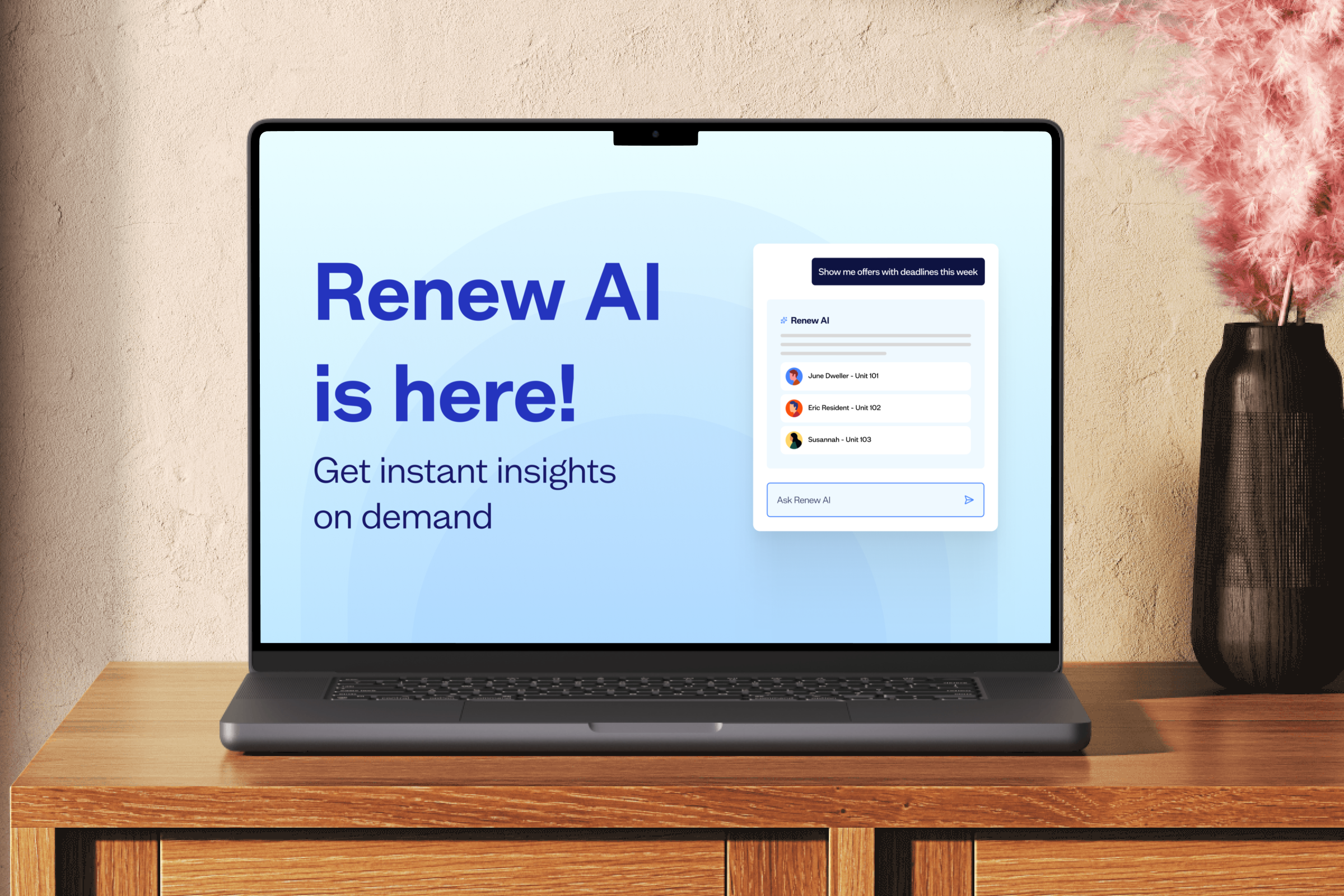
Last year, we built a natural-language search experience at Renew that let property managers ask questions about their renewal data instead of hunting through reports.
From day one, the AI returned accurate answers — a successful feature by most standards. But then we looked at the usage data:
- Fewer than 7% of users ever tried it.
- More than three-quarters of those people never came back for a second session.
- Nearly 40% of customer accounts never touched it at all.
The model wasn't the problem. The product was.
That experience completely changed how I think about conversational AI design. It forced me to stop asking, "Can AI answer this question?" and start asking, "Will someone actually use it while they're trying to get their job done?"
Those are two very different design problems. Solving for each led me to rethink nearly every assumption I’d heard about designing conversational AI.
6 Principles Behind Better Conversational AI Design
1. A chat box isn’t a strategy.
One misconception I see all the time is that conversational AI design starts and ends with chat interfaces.
For me, it's not really about chat windows. It's about designing what happens when someone can type or ask a question in plain language and get a useful answer back, instead of clicking through five screens to find it themselves.
You might also like: What Your AI Leasing Assistant Is Missing (And Where Multifamily AI Is Headed)
The conversation is just the interface. The real design work is everything underneath it:
- What data is the model allowed to access?
- How does it earn the user's trust? How do permissions work?
- When should AI speak up, and when should it stay quiet?
- What information should the AI already know?
- What happens after it gives an answer?
A chat interface alone isn't a conversational AI strategy, because the conversation is simply how people interact with the product.
The real value comes from everything that makes that interaction useful.
2. Don’t make users go find the AI.
When we launched our first conversational AI experience, we designed it like most AI products do: a search bar, a blank input, and a place where users could ask anything. Technically, it worked. But behaviorally, it barely did.
Two statistics stood out: the average new user took 31 days just to discover the feature existed. And 72% of sessions consisted of a single question and immediate exit. It was like a vending machine. People could ask one question, get one answer, then leave.
The problem: We'd designed AI as a destination, instead of as part of the workflow.
So, we changed a couple things:
- We embedded AI where people were already working instead of sending them to a separate experience.
- We surfaced suggested prompts based on the task in front of them instead of expecting users to think of questions on their own.
That design change had a bigger impact than another model improvement ever did.
3. Design for the day after the demo.
One of the biggest mistakes companies make is treating the model as the hard problem and adoption as the easy one. In my experience, it's the opposite.
People assume AI features fail because the AI wasn't impressive enough. But most of the time, they fail because nobody designed for the day after the demo.
Getting an LLM to answer questions is becoming easier every month. Getting someone to trust it, remember it exists, and make it part of their daily routine is still incredibly difficult.
That's why I care less about total query volume than I do about behavior:
- Do people come back?
- Do they ask follow-up questions?
- Does the AI help them complete a real task?
If the answer is no, it doesn't matter how impressive the demo looked — the novelty will wear off fast. What's left is whether the feature earned a permanent place in someone's workflow.
4. Never make AI the only way through.
One rule has stayed constant throughout every AI project I've worked on: the task always has to be finishable without AI. That's not a preference, it's a design constraint.
If the model has a bad day, doesn't know the answer, or simply isn't available, people still need to get their work done. Good AI removes friction, speeds up decisions, and surfaces information faster. It should act as an enhancement layer — not another dependency, bottleneck, or gatekeeper.
The moment AI starts interrupting someone or standing between them and the task they're trying to complete, it stops feeling helpful and starts feeling like the product doesn't trust the person using it.
5. Show your work.
Trust has to be earned by conversational AI from the very first interaction. An AI answer is only as trustworthy as what's feeding it, and no amount of good interface design fixes data that isn't clean or correctly scoped underneath it.
If AI can't answer these questions about a recommendation, it shouldn't make the recommendation in the first place:
- Why did you recommend this? Show the history and behavioral signals behind the recommendation.
- Where did this information come from? Make every recommendation traceable to real data, not something users have to accept on faith.
- How confident are you? Explain what's driving the recommendation, and when the underlying signal isn't strong enough yet, say so instead of dressing up uncertainty as confidence.
- Who can see this information? Protect customer data with correctly scoped permissions. One mistake is a blocker, not a backlog item.
That's the difference between guidance and manipulation. Good conversational AI helps people make better decisions by giving them context. Bad conversational AI asks people to trust a black box.
In high-stakes workflows — especially when people are making decisions that affect customers, revenue, or compliance — that isn't good enough.
6. Context is the product.
People don’t operate in a vacuum, and neither should AI. The same recommendation can be exactly right for one user and completely wrong for another. Context is what determines whether it’s actually useful.
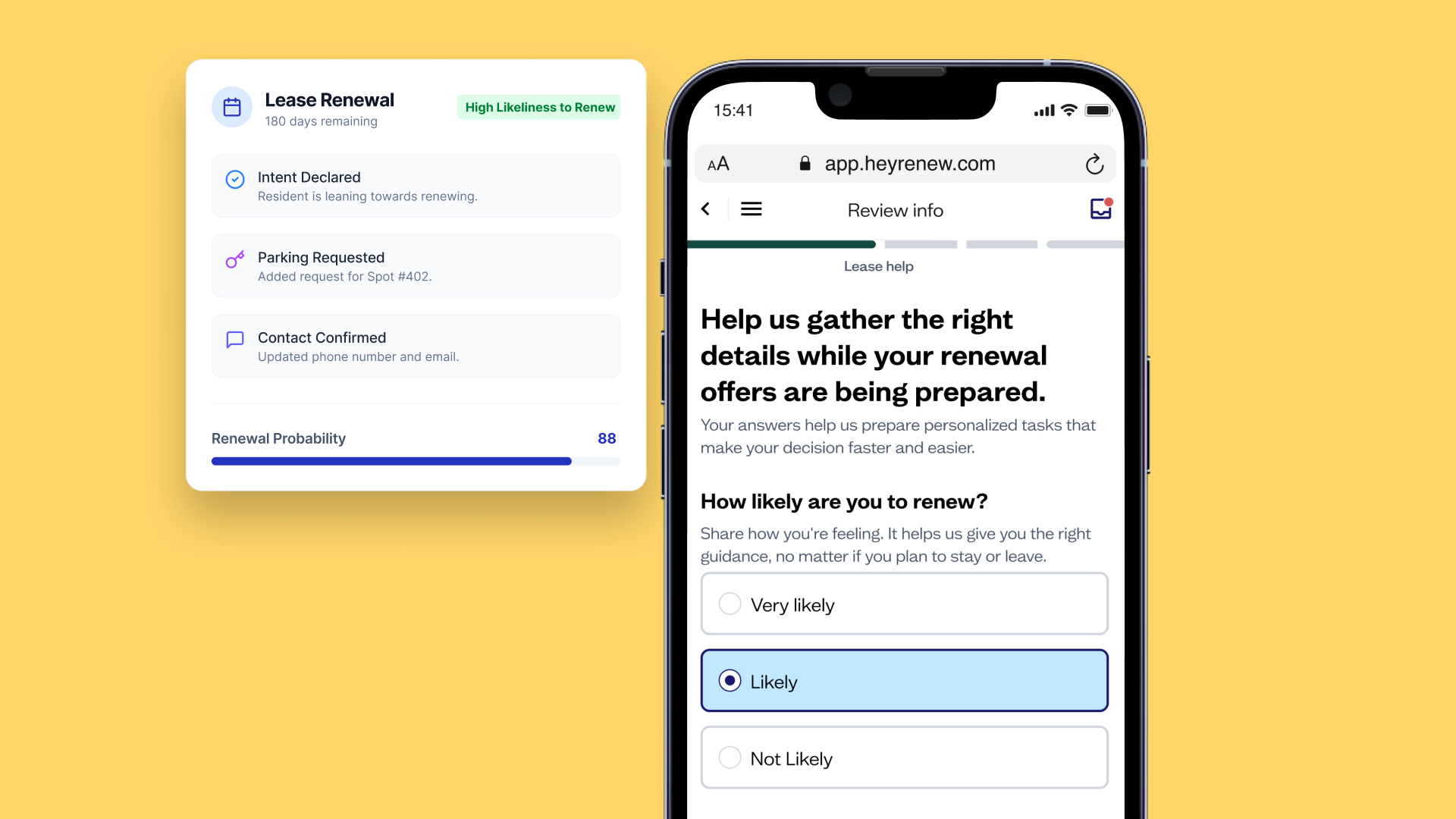
Take our retention platform. A renewal risk score only has meaning in context: where someone is in their lease, whether they've already been contacted, and what unresolved maintenance issues could be driving churn risk. Without that level of nuance, a model can be technically right and still point at the wrong response.
That’s why the real conversational AI design work is deciding what information should surround the conversation before the conversation ever begins.
You might also like: Which Multifamily AI Solution is Right for My Portfolio? Comparing Tools & Features
The Future of Conversational AI Design
Right now, most conversational AI still lives in its own box: a chat panel, a floating assistant, or a search bar you have to intentionally open. That model won't disappear overnight, but I don't think it's where the best experiences are headed.
The most valuable AI won't ask people to stop what they're doing and start a conversation. Instead of opening an AI assistant, users will simply notice that the software they already use:
- Explains more
- Predicts more
- Prioritizes better
- Helps them make decisions faster
The conversation becomes part of the workflow, not a separate destination. That’s the direction we’ve moved at Renew.
What started as a chat-style query tool now surfaces explanations, risk insights, and recommendations wherever property managers are already working — from their dashboard to third-party software via a browser extension. The AI is still there, but it no longer asks people to come find it.
Eventually, I think people will stop thinking about conversational AI altogether. That's honestly the goal. When people stop noticing it because it's quietly helping them do their jobs better, conversational AI design will have succeeded.

.png)
.png)
.png)
.png)
.png)
.png)
.png)
.png)
%20(1).png)
.png)
.png)
.png)
.png)
.png)
.png)

.png)
.png)
.png)
.png)
.png)
.png)
.png)
.png)

.png)
.png)

.png)

.png)






.png)
.png)
.png)