.svg)

.svg)


.png)
Halfway through the year, it's clear the multifamily 2026 outlook can't be explained by a single headline.
That’s a departure from recent years. Between pandemic-era migration, record apartment deliveries, and the onset of multifamily AI, most have been dominated by one defining story. But even if today's multifamily market trends look subtler, they're still creating a very different operating environment from the one we were in six months ago.
Long-term, multifamily demand remains healthy; Deloitte expects renting households to grow 21.7% by 2035. Developers, however, are easing off the gas. NAHB reported another drop in housing starts in May, a trend fueled by elevated financing and construction costs that should gradually improve supply-demand balance.
These macro trends all play a role in the 2026 multifamily outlook. But the more interesting patterns are the ones we see inside day-to-day operations: how residents make decisions, where technology is reshaping expectations, and how operators allocate resources when every decision carries more weight.
Below, we'll break down seven multifamily housing trends that are likely to shape the rest of the year — and what each could mean for pricing, retention, and long-term portfolio performance.
7 Multifamily Housing Trends (And What They Mean for the 2026 Multifamily Outlook)
1. The cost of losing the wrong resident is rising.
For most of the past two years, the industry's focus has been straightforward: keep buildings full. Heading into the second half of 2026, the equation is changing.
Apartment demand grew less than half as fast in Q1 2026 as it did a year earlier, according to Harvard's latest State of the Nation’s Housing report. As replacement demand becomes less predictable, many operators are shifting their focus from maximizing rent growth to protecting occupancy and stable cash flow.
Making that shift strategically depends on understanding where retention efforts yield the greatest return.
The takeaway for operators:
Not every renewal carries the same financial weight. The operators who outperform will focus less on every expiring lease, and more on the renewals that meaningfully affect portfolio performance.
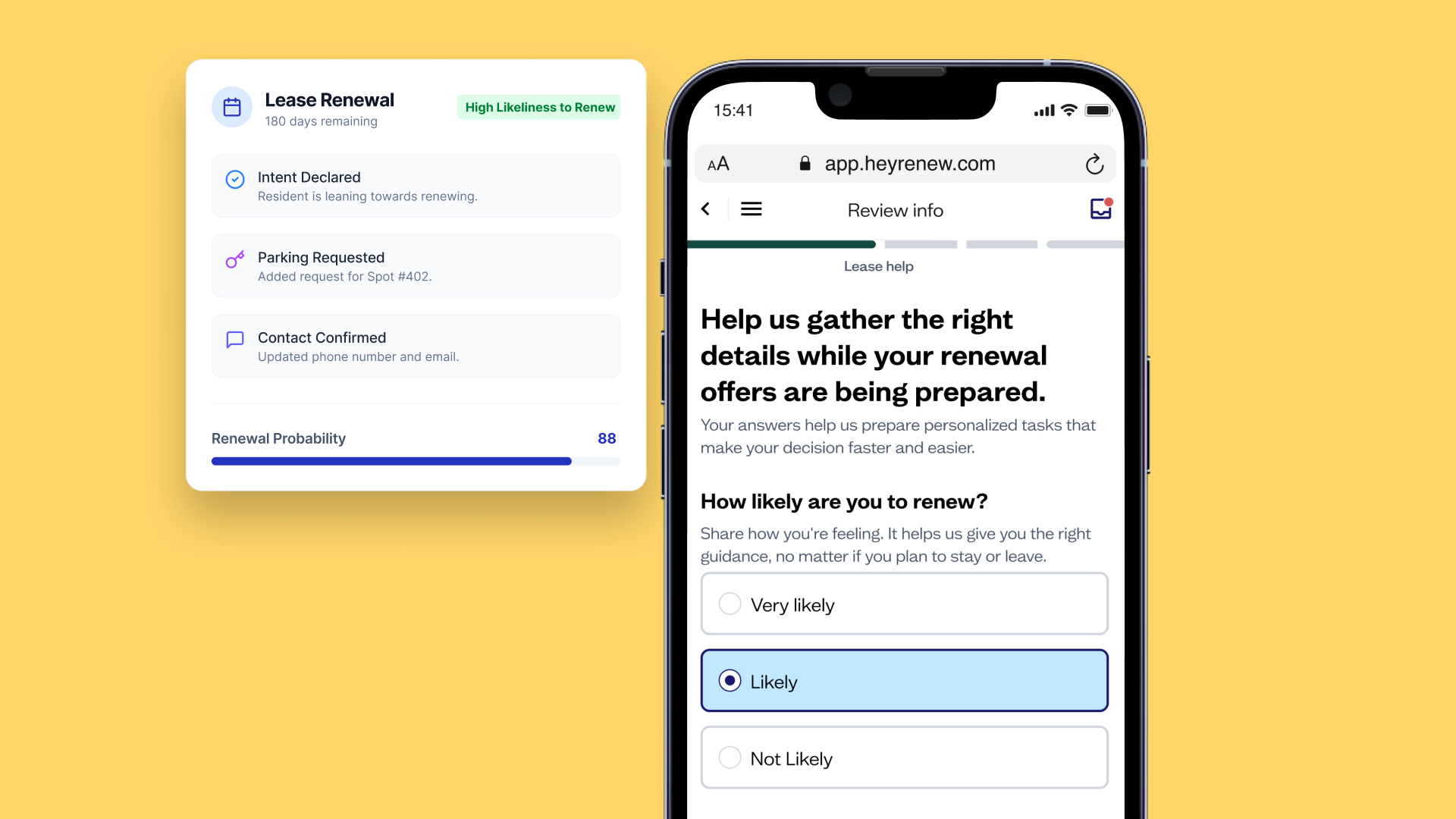
Stronger resident intelligence can help operators identify those opportunities — so that teams’ time, incentives, and outreach can go where they'll have the greatest impact.
Renew Signal lets you turn earlier resident signals into smarter retention decisions with the earliest resident intelligence in multifamily. Get on the waitlist →
2. Concessions are proving harder to unwind.
The era of widespread concessions isn't over just yet.
Zillow found that about 40% of all rental listings offered concessions this spring, with operators in high-supply markets continuing to rely on incentives more heavily than others.
As incentives become near-ubiquitous, their effectiveness becomes a bigger question. Consider: Every blanket concession offered to a resident who would have renewed anyway carries an opportunity cost, making precision critical.
The takeaway for operators:
As concession costs add up, every incentive dollar deserves a clear purpose.
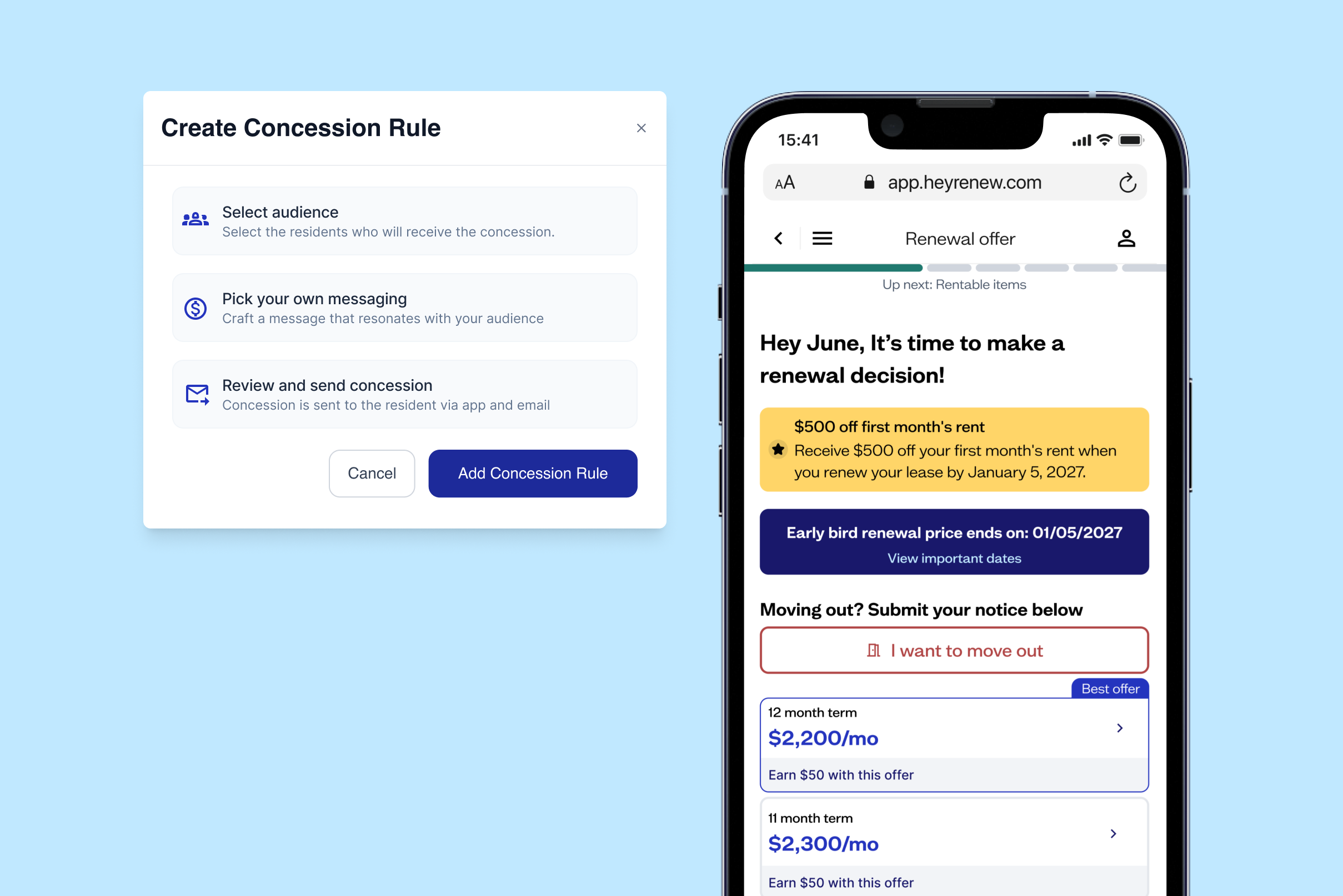
At renewal, earlier insight into resident intent helps operators deploy concessions and rewards more strategically. That way, they're leveraged where they’re most likely to influence a decision, protecting revenue while avoiding unnecessary discounting.
3. National averages are telling less of the story.
The national multifamily housing outlook still matters, but local conditions are increasingly determining who wins.
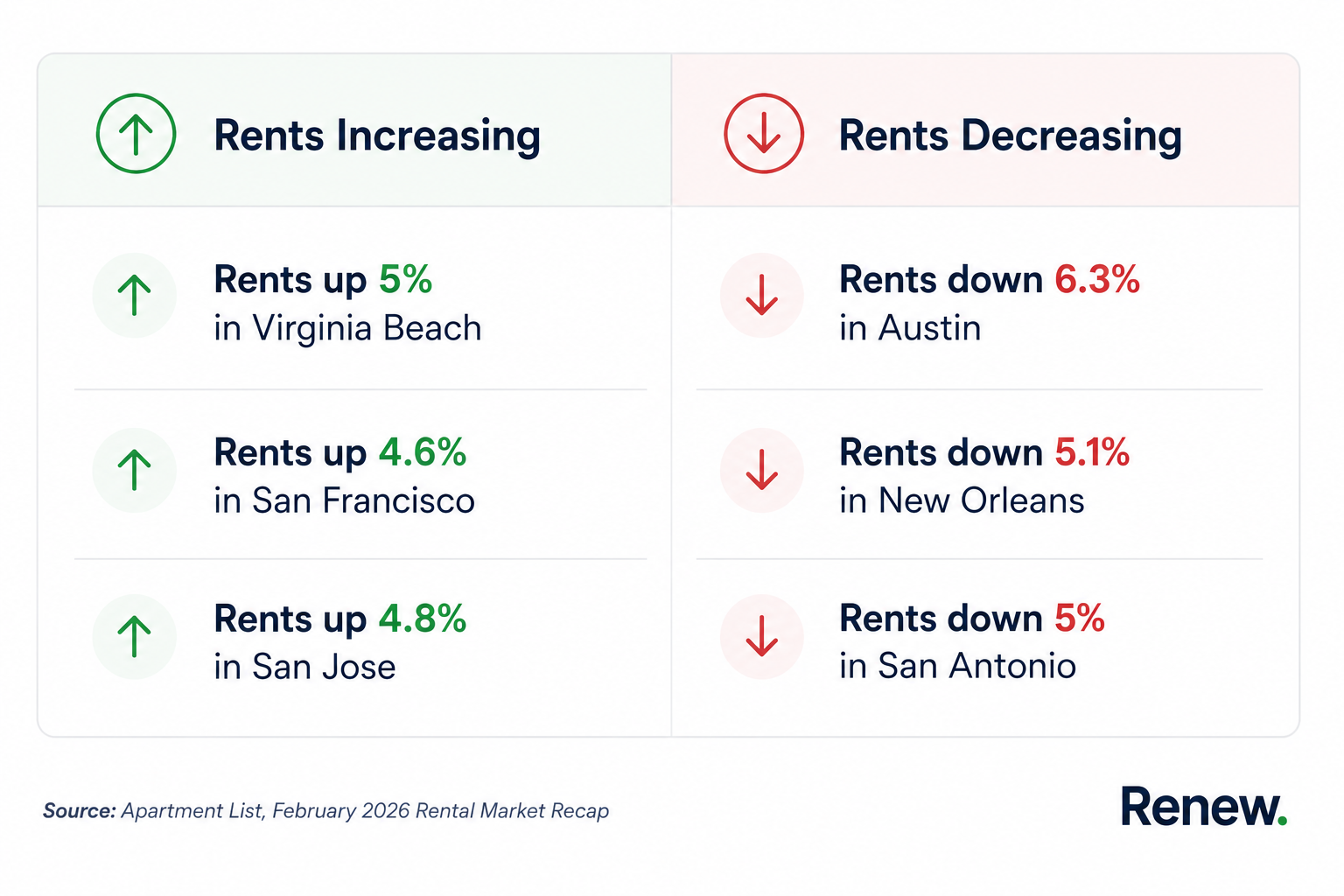
Mid-year reports from both JP Morgan and Seyfarth describe a market pulling in different directions. Some metros continue working through elevated supply, while others have already regained pricing momentum.
Apartment List's data underscores that gap. Earlier this year, it found that the divide between the strongest- and weakest-performing rental markets the largest it's been in years.
The takeaway for operators:
When every market is operating under a different set of conditions, portfolio-wide policies are harder to justify.
The most effective operators will adapt community by community, not portfolio by portfolio. Local conditions will determine where pricing, concessions, and retention strategies should stay consistent and where they should flex.
4. Residents are taking longer to decide.
Today’s decision window is getting longer, driven by both higher supply and economic uncertainty.
Renting households earning under $30,000 now have a median of just $210 left each month after paying rent, according to Harvard’s housing report. The same report found consumer confidence fell to an all-time low in April 2026 after the onset of the U.S. war against Iran — dropping below levels seen during the Great Recession and pandemic.
The result is a more deliberate renter. Multifamily Dive reports that today’s residents are spending more time price-shopping and comparing options before committing to a lease.
The takeaway for operators:
Come renewal season, strong resident behavioral data can help turn a longer decision window into an operational advantage.
Every comparison, delay, or change in intent offers another opportunity to understand what residents value — and another chance to influence the decision before it becomes a move-out.
5. More move-outs are staying close to home.
The pandemic-era renter migration boom has settled into a different pattern.
Apartment List's 2026 Renter Migration Report clocked the share of renters searching for housing in another state at 24%, down from 25% the year before. Meanwhile, the share searching for housing in a different in-state metro has held steady at 39% since 2023.
In other words, many renters are still moving. They're just staying closer than they were a few years ago. Combined with a for-sale market that remains out of reach for many households, operators have more reason than ever to assume a "lost" resident hasn’t left the market — or even the neighborhood.
The takeaway for operators:
Today's move-outs often represent demand that's still within reach.
Understanding where residents go next can help operators recover more in-network demand, strengthen competitive intelligence, and make smarter pricing and retention decisions over time.
You might also like: When Your Best Lease Renewal Strategy Isn’t Actually Renewal
6. Fee transparency is fueling compliance risk.
Pricing transparency requirements keep gaining momentum.
The FTC began rulemaking around deceptive rental fee practices in 2026, and states like Colorado and Massachusetts have already implemented expanded requirements for fee disclosures.
With laws and expectations evolving, all-in pricing is a resident experience issue as much as a regulatory one. From leasing and renewals to move-out, operators face growing pressure to present costs in ways that are clear, accurate, and consistent across touchpoints.
Especially for those managing communities in multiple states, this introduces operational complexity. As regulations around pricing, disclosures, and resident communications tighten, staying state-compliant through manual processes alone becomes a gamble.
The takeaway for operators:
Resident trust and regulatory compliance increasingly go hand in hand.
Embedding pricing, approvals, disclosures, and compliance into everyday workflows will help teams stay consistent across communities while reducing administrative burden and minimizing compliance risk.
7. AI proptech is everywhere, but “conversation automation” isn’t enough.
Heading into 2026, AppFolio found 44% of property management teams were already using AI. Conversational AI took center stage among multifamily technology trends, with operators using it to automate leasing, resident communications, and other onsite workflows.
This automation, when designed well, has real value. One recent survey found that 47% of renters would choose a “less ideal” apartment if it were easier to tour, demonstrating the benefit of tools like leasing chatbots. But as this AI becomes more common, its limits are also becoming clearer.
Now, the question is shifting from "Can AI automate this task?" to "Did AI actually change the business outcome?"
Because of that, industry experts expect the next generation of multifamily AI to be judged less by chat activity and more by the quality of insight the AI delivers.
The takeaway for operators:
As AI becomes table stakes, competitive advantage comes from pairing automation with deeper behavioral insight and predictive tools. That’s especially true for protecting occupancy and driving retention.
Looking beyond what residents choose to share with a chatbot — if they share anything at all — and to their behavioral signals can help operators spot changing intent sooner.
That way, teams have more time to intervene, influence decisions, and address emerging risks before they show up as NTVs or in portfolio reporting.
The Second Half of 2026 Belongs to Operators Who See More, Sooner.
Taken individually, each of the above multifamily trends tells a different story. Together, they point to a broader shift in how multifamily performance is created.
Across pricing, renewals, concessions, compliance, and AI, one pattern keeps surfacing: earlier visibility is becoming more valuable. By the time traditional KPIs reveal a problem, the underlying resident behavior has often been unfolding for weeks or even months.
That makes earlier signals increasingly valuable for understanding where demand is shifting, which residents need attention, and where teams still have time to influence the outcome.
As you plan for the rest of 2026, consider a few questions:
- Where are your teams still waiting for lagging indicators instead of acting on leading ones?
- Which resident decisions remain difficult to explain — or even harder to predict?
- Where could earlier visibility improve pricing, retention, or operational consistency?
- How much of your strategy is driven by what already happened versus what residents are doing today?
The operators who build around those questions will be better equipped to adapt as the market evolves — spending less time reacting to portfolio results and more time shaping them.
Stay Ahead of What's Shaping Multifamily.
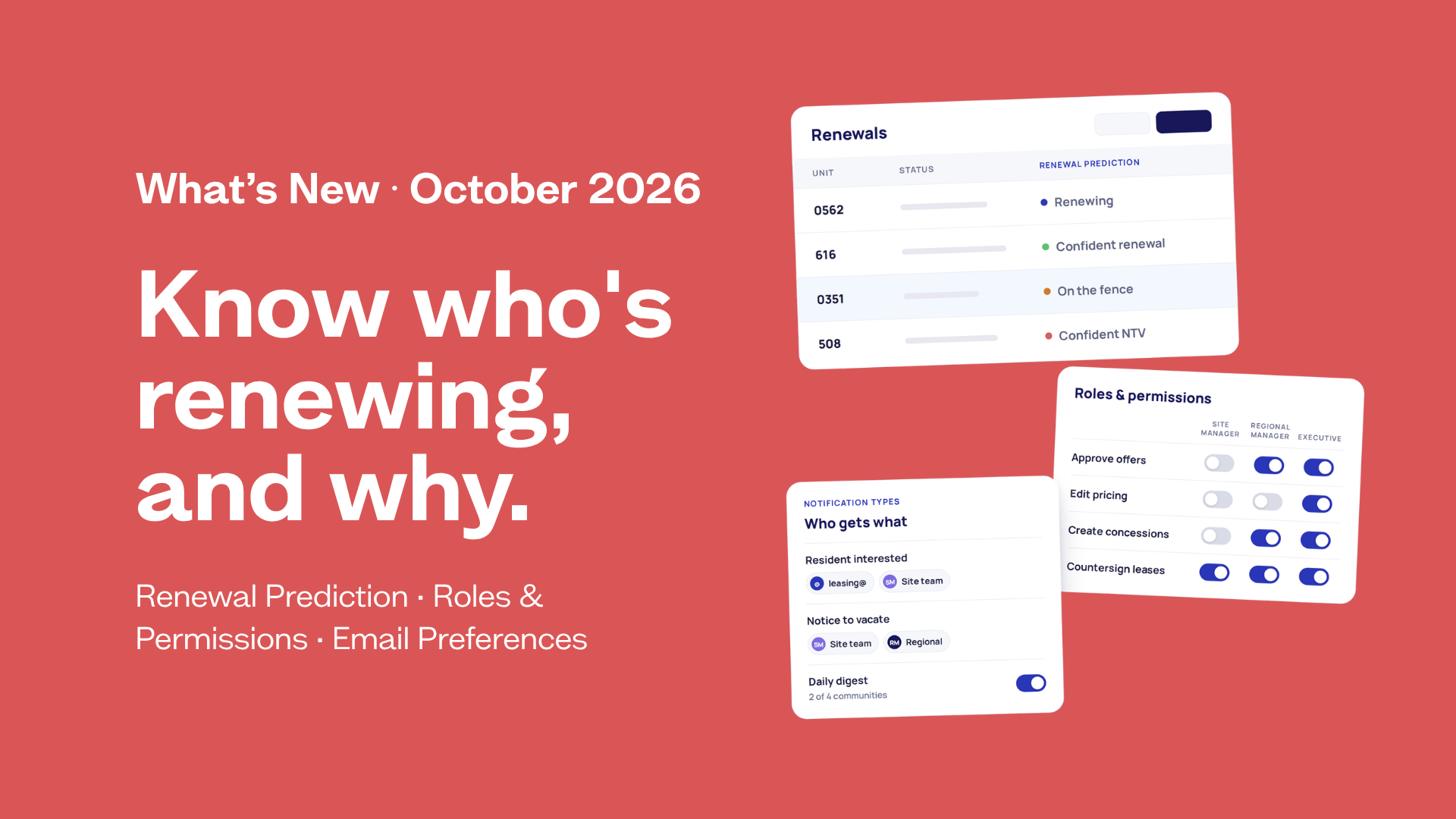
The market won't stop changing after this article. Get monthly analysis from Renew’s co-founders Rob and Kevin on the multifamily housing trends, resident behaviors, and operational shifts worth paying attention to.


.png)
.png)
.png)
.png)
.png)
.png)
.png)
.png)
%20(1).png)
.png)
.png)
.png)
.png)
.png)
.png)

.png)
.png)
.png)
.png)
.png)
.png)
.png)
.png)

.png)
.png)

.png)

.png)






.png)
.png)
.png)