.svg)

.svg)


.png)
Resident experience used to live on the margins of multifamily operations. It got attention in bursts – an amenity refresh here, a resident event or survey there. But after these initiatives wrapped, focus always swung back to the usual priorities: leasing, pricing, and day-to-day operations.
Operators saw resident experience as valuable. But they didn’t see it as central to how portfolios are run. Today, that’s changed.
Now, resident experience is considered foundational to the metrics operators prioritize most: renewal rates, vacancy loss, staffing efficiency, and long-term NOI. At scale, it’s shaped less by individual interactions and more by how consistently systems and workflows work together.
High-retention operators have learned how to design around that reality. Below, we’ll look at six practices these operators have in common and how each ladders up to portfolio performance. But first, let’s align on:
What Defines Resident Experience in Today’s Market?
Today’s residents evaluate their experience less on amenities alone and more on how clearly, quickly, and predictably everyday interactions unfold.
That makes modern resident experience the outcome of dozens of touchpoints across the full resident lifecycle, including:
- How clearly pricing, fees, and policies are communicated
- How easy it is to apply, sign, and get questions answered
- How quickly maintenance requests are acknowledged and resolved
- How consistent communication feels across channels
- How predictable and transparent the renewal process is
Because these interactions repeat over time, resident experience acts as an operating signal, exposing where execution is holding up and where it’s starting to strain.
Outperforming operators design around that signal, with an approach that directly ties resident experience efforts to measurable retention outcomes.
How High-Retention Operators Improve Resident Experience
Increasingly, operators with strong retention results treat resident experience the same way they treat leasing velocity or occupancy forecasting: as something that can be designed, monitored, and improved at scale.
That belief shows up in a set of consistent operator choices.
1. They Treat Resident Experience as Core Infrastructure
High-retention operators see resident experience as an operating discipline. Before systems or workflows are finalized, they pressure-test whether experience is built into the model by asking:
- Where does the resident experience live operationally? Is it clearly owned, or spread across teams with unclear handoffs?
- Which resident-facing moments are load-bearing? Where do small failures compound into outsized frustration or churn?
- How do systems support clarity by default? Do pricing, policies, and next steps surface consistently without manual explanation?
- What breaks first as volume increases? Which processes are most likely to strain as requests, communication, and renewals scale?
- How are tradeoffs evaluated? When efficiency, speed, and personalization compete, which outcomes take priority?
- What assumptions are baked into timing and communication? Are workflows designed around resident decision-making, or internal convenience?
- How hard is it for teams to do the right thing? Do systems make consistent resident experience easier, or rely on individual effort to compensate?
When resident experience is designed into operating decisions, it becomes a built-in part of how the portfolio runs, and not something teams scramble to correct later.
2. They Frame Resident Experience as a Financial Strategy
Operators who score high on retention view resident experience as a revenue lever, not a brand initiative – and for good reason. A 2025 Multi-Housing News study found that residents who report being “highly satisfied” with their experience are 2.3 times more likely to renew.
At portfolio scale, that multiplier changes the math. It means:
- Lower turnover costs. Fewer move-outs reduce make-ready spend, vacancy loss, and marketing expense.
- More predictable occupancy. Earlier decisions support steadier cash flow and fewer reactive pricing moves.
- Lower operational drag. Clearer communication reduces escalations, repeat inquiries, and manual correction.
Across hundreds or thousands of units, those improvements compound quickly.
Their financial impact becomes most visible when growth slows. In high-supply or constrained markets, stability carries more weight than marginal rent increases. Portfolios built on strong resident experience tend to see less occupancy volatility and more consistent operating demands.
Over time, that stability becomes a durable advantage anchored in retention, rather than in rent growth alone.
3. They Make Centralization Support Resident Experience Outcomes
From leasing hubs to shared service teams, centralization is now common across large portfolios. What separates high-retention performers is how centralization is designed.
Strategic operators keep the focus on outcomes along the resident journey – and not on reducing system count for its own sake. Case in point: UDR recently reduced resident turnover by more than 300 basis points after embedding resident experience into its centralized model.
Getting there means:
→ Designing Centralization Around Retention Risk
Centralization isn’t just meant to streamline work. It’s designed to improve outcomes along the resident journey – especially moments tied to renewal decisions. That means using it for:
- Earlier, more relevant outreach, before residents start shopping
- Cleaner handoffs and consistent messaging, reducing confusion and trust-breaking moments
- Faster, more predictable responses, preventing small issues from turning into disengagement
- Clear, standardized pricing communication, limiting surprises that trigger market checks
→ Pairing Centralization With Targeted Depth
Strong portfolios don’t expect centralized platforms to provide equal depth across every function. They operate with a layered model:
- Broad leasing and operations systems for coordination and scale
- Purpose-built systems for high-impact moments that require greater precision
Retention is one of those high-impact moments.
It hinges on earlier visibility into intent and precise timing – depth that broad operating platforms aren’t designed to deliver on their own. That’s where dedicated renewal management systems add value within a centralized framework.
4. They Embrace the Growing Role of AI in Resident Experience
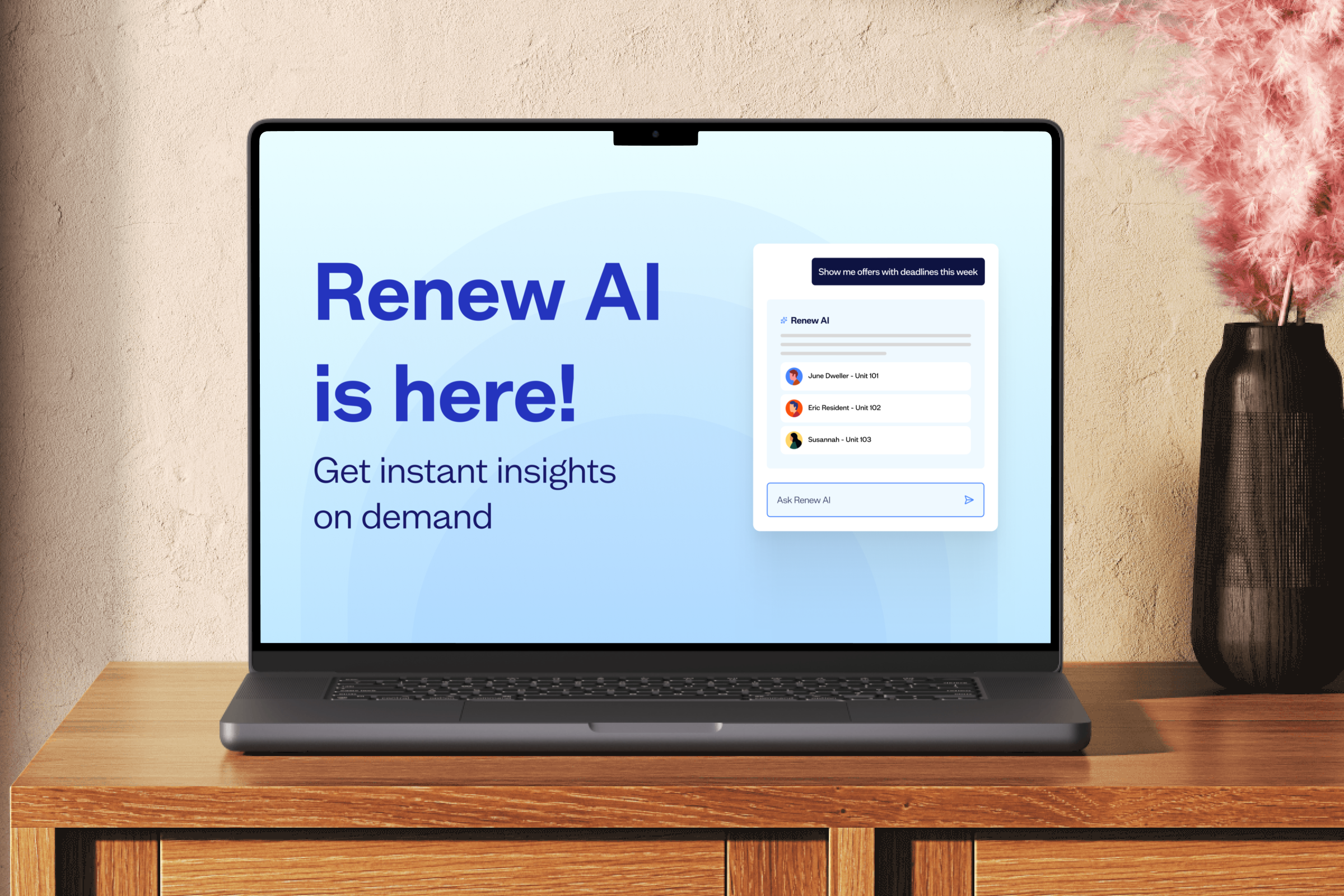
AI is no longer confined to leasing. AI in resident experience now influences communication timing, churn detection, service prioritization, and renewal strategy.
Operators are deploying AI tools for enhancing resident experience in several ways:
- Predictive churn detection
- Automated renewal reminders
- Sentiment analysis from service interactions
- Personalized communication triggers
When AI for property management is applied to retention, it creates earlier visibility into potential turnover risk. That visibility improves forecasting and reduces reactive pricing.
Automation in resident experience isn’t about removing the human element. It’s about removing friction, delay, and inconsistency.
Automated workflows:
- Trigger renewal conversations earlier
- Ensure pricing clarity across channels
- Standardize disclosures and communication
- Reduce manual follow-ups
When workflows are structured and automated, residents experience fewer surprises.
5. They Track Resident Experience Signals Before They Become Churn
As portfolios grow, resident experience isn’t assessed interaction by interaction. It’s understood through patterns in resident signals that repeat across properties and over time.
Strategic operators monitor these signals for early indicators of retention risk, including:
- Rising back-and-forth on routine issues. When simple requests require multiple follow-ups, clarity or ownership is slipping.
- Resolution times drifting upward. If straightforward issues take longer to close, friction is usually building beneath the surface.
- Confusion around pricing or next steps. Uncertainty near renewal or policy changes often triggers market checks.
- Inconsistent messaging across properties or channels. Mixed signals weaken trust and make the experience feel unreliable.
- Delays that cluster at predictable lifecycle moments. Slowdowns during application, service, or renewal stages point to process gaps that residents feel.
Standardized workflows help create the consistency that makes patterns detectable. When processes follow a repeatable structure, deviations stand out instead of blending into noise.
But visibility alone doesn’t change outcomes. A connected data layer makes these signals actionable by aggregating activity across systems, identifying intent shifts, and surfacing retention risk portfolio-wide.
6. They Create a Personalized Resident Experience – Without Adding Operational Complexity
Resident expectations have been reshaped by consumer platforms. More and more, that means generic messaging and inflexible offers are falling flat. Across the lifecycle, from move-in to maintenance to renewal, communication is now expected to reflect behavior, tenure, and context.
Leading operators are responding by building AI-supported personalization into workflow design, rather than leaving personalization up to individual effort.
In practice, that looks like:
- Lifecycle-aware communication. Messaging adjusts based on tenure, engagement patterns, and upcoming decision points.
- Context-driven positioning. Offers reflect resident history and timing, instead of defaulting to static terms.
- Behavior-based outreach triggers. Engagement shifts prompt proactive communication before residents fully move on.
- Channel consistency. Information aligns across email, portal, SMS, and on-site conversations.
- Scalable relevance. Personalization is system-generated, allowing portfolios to maintain precision without adding headcount.
When personalization is structured this way, relevance scales. Residents receive context-aware communication that makes sense for where they are, and teams operate from signals instead of guesswork.
7. They Reinforce the Resident Relationship at Renewal
Renewal is the defining moment for resident experience. It’s when experience turns into action, and when months of interaction are distilled into a single choice: stay or leave.
Operators who retain at higher rates don’t treat this moment as a single notification cycle. They manage it as a continuation of the relationship already in motion.
That’s clear from a few deliberate choices they make:
- They plan for multiple renewal paths. Pricing conversations, lease term options, and retention levers are structured in advance rather than improvised under time pressure.
- They segment renewal risk before outreach begins. Residents are prioritized based on intent and engagement signals, allowing effort to focus where it matters most.
- They anchor outreach in prior engagement. Communication reflects tenure, service history, and engagement patterns, instead of resetting the conversation from zero.
- They control timing with discipline. Conversations begin while decisions are still flexible, not after residents are actively comparing alternatives.
- They maintain tone and standards. Pricing, explanations, and next steps feel aligned with the resident experience delivered throughout the lease.
- They remove uncertainty early. Clear framing reduces the need for residents to “pressure test” the market for reassurance.
When renewal is structured this way, retention becomes less reactive and more controlled. Decisions are influenced earlier, pricing conversations land with context, and effort is directed where it has the highest impact.
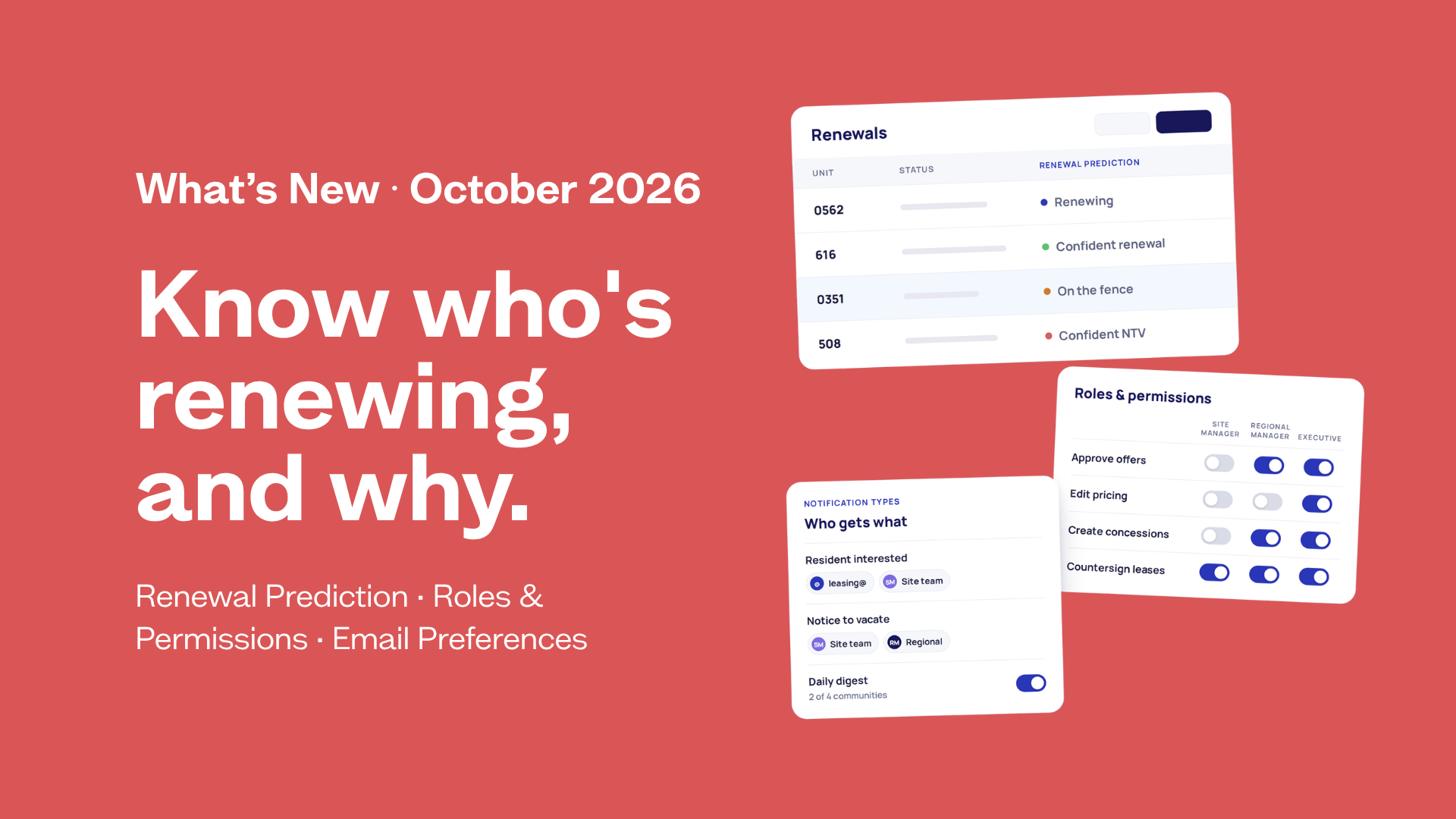
That’s where purpose-built lease renewal software adds leverage. By combining disciplined workflows with earlier visibility into intent, a modern RMS like Renew helps operators reinforce the resident relationship at the exact moment it affects portfolio performance most.
What the Best Resident Experience Software for Property Managers Enables
Not all resident experience software is created equal.
Many tools focus on communication workflows or resident portals. Those capabilities help teams stay organized, but they rarely connect everyday engagement to the moments that actually determine retention.
The best resident experience software for property managers is designed to do three things:
1. Connect communication, service, and renewal data.
Resident experience unfolds across maintenance requests, messages, and renewal conversations. When those signals live in separate systems, early indicators of churn are easy to miss. Connected data allows operators to see how engagement patterns influence renewal decisions.
2. Integrate directly with the PMS.
Resident experience platforms must operate inside the system of record. Tight PMS integration ensures renewal offers, deadlines, and resident actions stay aligned with lease data and compliance requirements.
3. Provide portfolio-level visibility.
As portfolios scale, retention trends emerge through patterns. Operators need clear insight into renewal timing, engagement signals, and potential churn risk across properties.
Renew sits at this intersection — connecting resident engagement signals with the systems that manage leases and renewals, so operators can act on emerging retention risk instead of discovering it after the fact.
Resident Experience Is What Retention Runs On
High-retention portfolios don’t treat resident experience as a side initiative. They embed it into systems, workflows, and operating decisions from the outset – so consistency is built into the model, not left to individual effort.
When that foundation is in place, renewal becomes more controlled. Signals surface earlier. Communication aligns with prior engagement. And teams influence decisions while outcomes are still flexible. Over time, that discipline protects occupancy, reduces volatility, and strengthens portfolio stability.


.png)
.png)
.png)
.png)
.png)
.png)
.png)
.png)
%20(1).png)
.png)
.png)
.png)
.png)
.png)
.png)
.png)

.png)
.png)
.png)
.png)
.png)
.png)
.png)
.png)
.png)

.png)

.png)






.png)
.png)
.png)