.svg)

.svg)



In multifamily, every unit filled matters, but what often goes overlooked is just how much money resides in the units you keep. The residents who stay year after year quietly drive NOI, stabilize revenue, and strengthen brand loyalty across your portfolio. For senior property managers and operators focused on performance, resident retention isn’t a feel-good metric; it’s one of the most reliable financial levers you have.
In a market defined by slim margins, shifting renter expectations, and rising operating costs, understanding how resident retention can save you money has never been more critical. According to McKinsey, top-performing real-estate operators are winning by leaning into customer experience (CX) and brand loyalty – including the loyalty of their residents – to protect and grow NOI.
Simply put, multifamily resident retention is no longer just about avoiding a move-out. It’s about building resident relationships that turn unpredictable cycles into predictable revenue.
What Is Resident Retention?
At its simplest, resident retention means keeping a resident in place through a renewal rather than replacing them with a new move-in. But for operators managing large, complex portfolios, it means much more than that:
- It’s about resident lifetime value – how long someone stays, how much ancillary revenue they contribute, and how many in-network moves or referrals they create.
- It’s about operational stability – fewer turns, fewer make-ready days, and fewer high-cost marketing cycles.
- It’s about brand and experience – because, as McKinsey notes, “residents who feel they belong stay longer.”
True retention is more than a percentage on a dashboard. It reflects how connected residents feel to your community, how consistent and efficient your renewal workflows are, and how well your teams anticipate resident needs before renewal time arrives. It remains one of the most direct levers for protecting NOI and reducing operating costs across multifamily portfolios.
For operators, resident retention ultimately means revenue protection, cost avoidance, and brand lift – in other words, long-term sustainability.
The Importance of Resident Retention
Here’s where the conversation gets serious: turnover costs are real, recurring, and largely avoidable.
Turnover is the hidden tax of multifamily operations. When a resident moves out, the expenses pile up quickly: lost rent during vacancy, make-ready labor, marketing spend, leasing commissions, and hours of administrative work.
Industry research shows that avoiding just one turnover can save anywhere from $3,000 to $5,000 per unit in direct costs alone. And that doesn’t include secondary effects on revenue and NOI.
Here’s how that math works in practice:
- Less downtime: Renewals mean fewer days without rent coming in.
- Lower marketing and leasing costs: No new photos, listings, promotions, or concessions required.
- Stabilized operations: Predictable occupancy makes revenue forecasting and budgeting far more accurate.
- Reduced labor/headcount drag: On-site and central teams can spend more time engaging residents and less time chasing logistics.
- Higher resident lifetime value: Residents who stay often adopt more services and amenities, such as parking, storage, utilities, and more, increasing ancillary revenue.
Scaled across hundreds or thousands of units, the financial impact becomes exponential. In other words, it’s time to get serious about those resident retention ideas.
McKinsey’s research backs this up: operators who build meaningful resident-brand relationships – not just operational structures – outperform their peers. Effective CX and loyalty programs can create a premium of up to 15 percent in NOI compared to peers, a significant margin shift for operators managing large portfolios.
JP Morgan similarly noted that the next era of multifamily performance is rooted in operational efficiency, and retention is where that efficiency pays off fastest.
Another recent study from Boston Consulting Group found that the average US consumer now belongs to more than 15 loyalty programs, a 10% increase since 2022. Airlines, hotels, restaurants, and retailers have all embraced loyalty as a core strategy. Why should multifamily be any different?
Resident retention isn’t just a community initiative – it’s an operational and financial strategy with measurable ROI.
The Underrated Differentiator
Here’s the thing: recent property management technology trends show a clear pattern. Operators invest heavily in new-lease acquisition, marketing blitzes, and amenity upgrades. Meanwhile, renewal strategy and retention often slip further down the priority list..
But that’s exactly where the real leverage lies.
Even a small lift in multifamily resident retention creates a meaningful impact for large portfolios. A modest 5-point improvement in renewal rates can yield hundreds of thousands of dollars in saved turnover costs and preserved rent annually.
Consider two identical portfolios — same unit count, same rent roll, same market. One focuses on filling the front door; the other focuses on keeping the back door closed. The retention-focused portfolio will:
- Turn over fewer units
- Complete fewer make-readies
- Spend less on marketing and concessions
- Capture more ancillary revenue
Over time, that performance gap compounds.
Just remember that retention isn’t a fixed metric – it can absolutely be improved with the right strategy. Kettler proved that after adopting Renew, reducing average vacancy loss by five days per unit through earlier decisions and more consistent renewal execution.
Steve Jobs once said, “A lot of times, people don't know what they want until you show it to them.” Move-outs may feel inevitable, but they’re far from set in stone.
Retention is the silent margin engine, and operators who invest will outperform
Resident Retention Software & Platforms: The Enablers
If retention is the strategy, a dedicated resident retention platform is the tool that turns it into measurable, repeatable action.
These systems do more than automate offers. They:
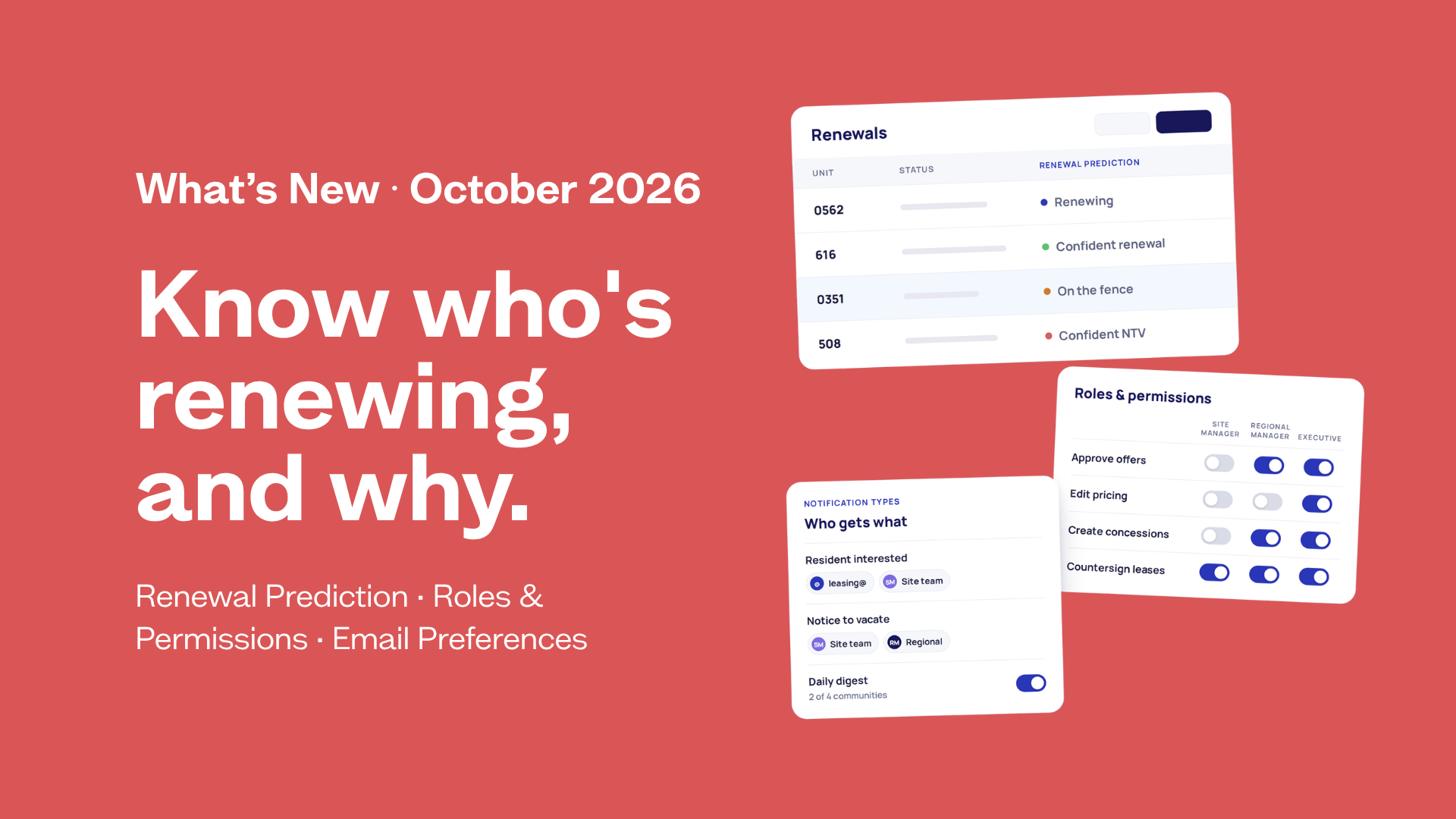
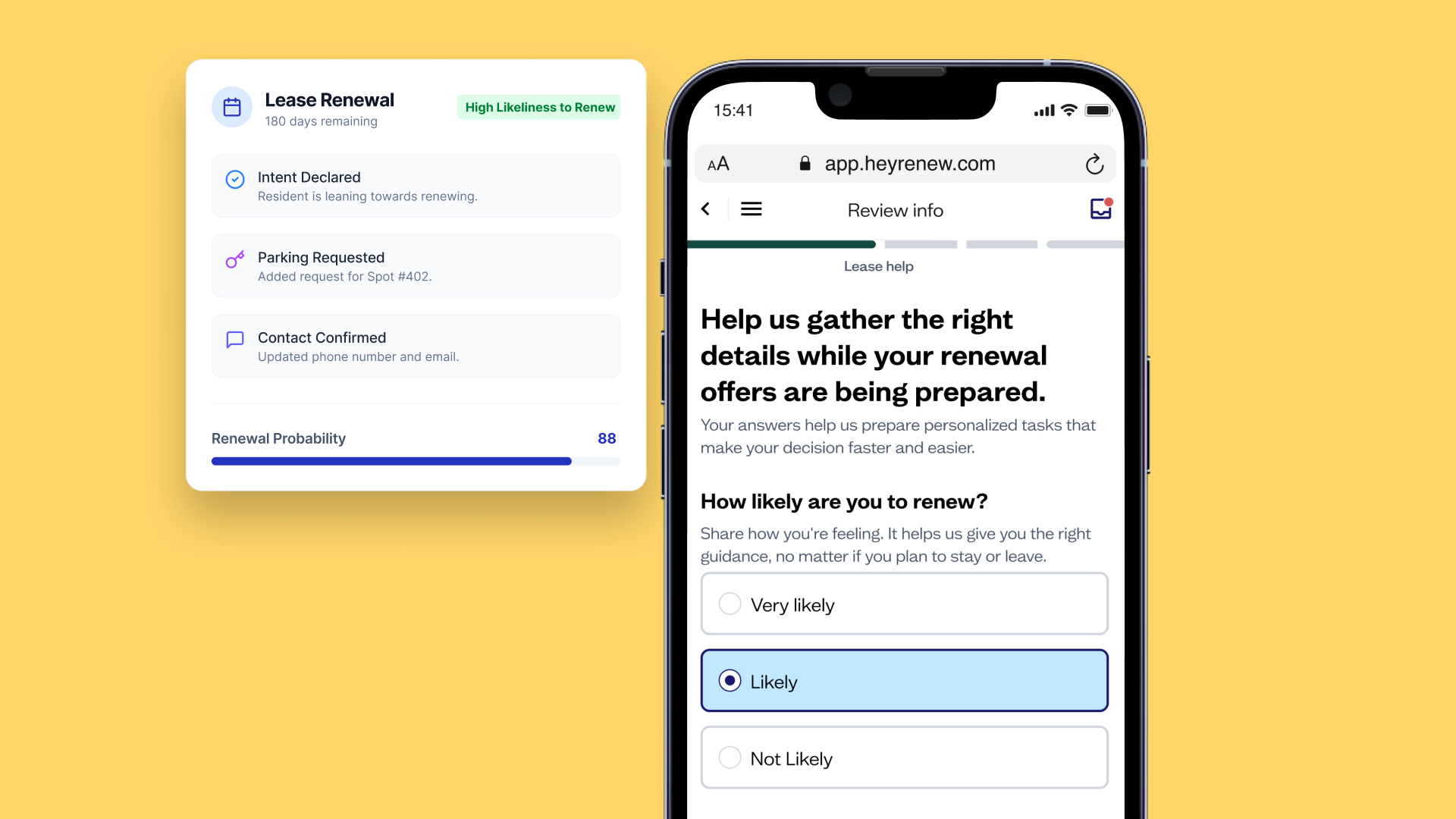
- Use predictive analytics to identify residents who are likely to move.
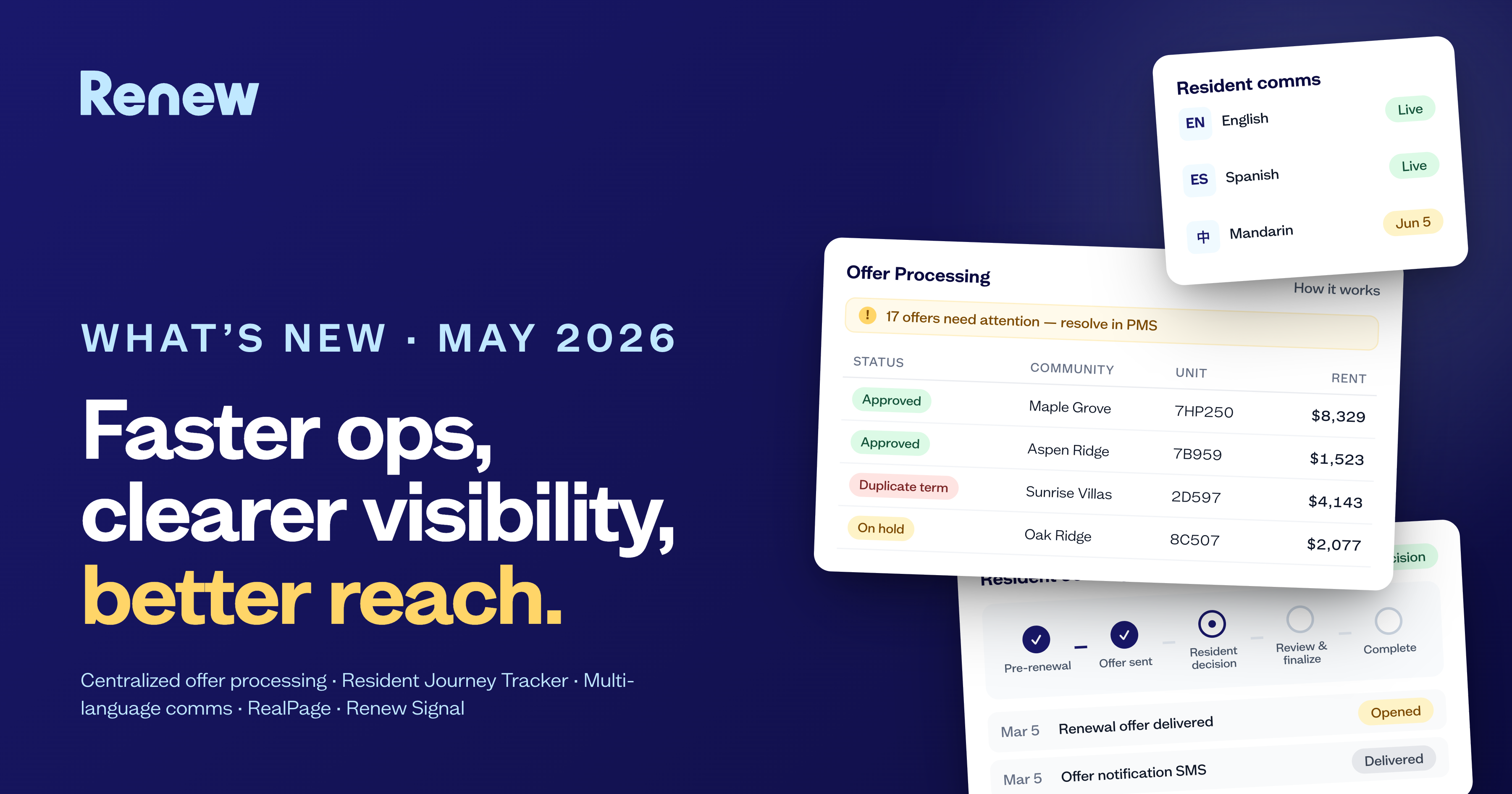
- Streamline renewal workflows, from digital offers, e-signatures, to integrations, so decisions happen earlier and with less friction.
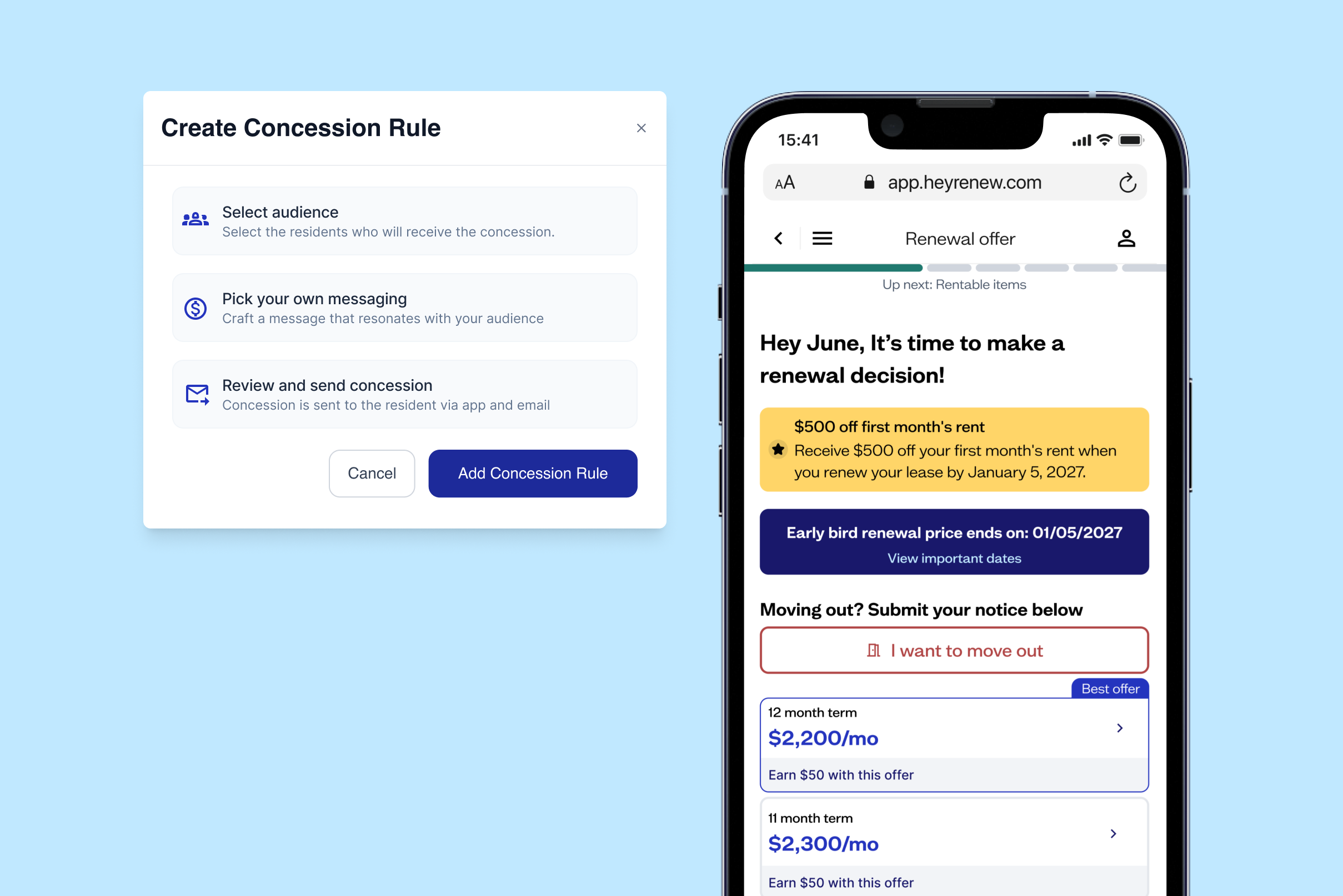
- Deliver personalized communications that increase engagement and reduce churn.
- Provide dashboard visibility that ties renewal activity directly to cost avoidance and revenue saved.
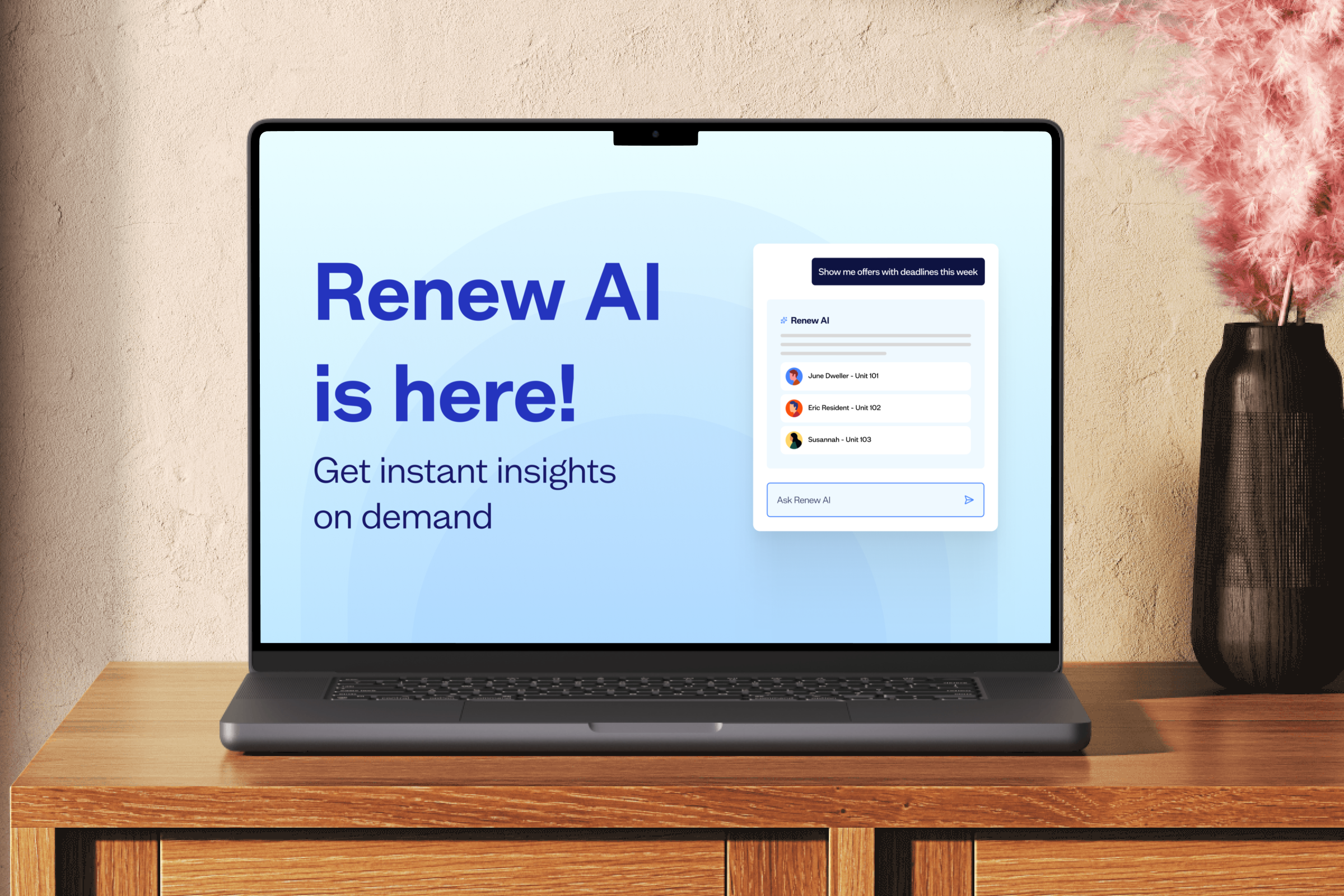
Platforms like Renew make retention operational, not just aspirational. Our resident retention software brings these capabilities to life across entire portfolios. With integrations into systems like Yardi and Entrata, Renew replaces manual processes with intelligent automation – enabling teams to act earlier, respond smarter, and execute renewal strategies with consistency at scale.
AI Lease Renewal Services: The Path to Retention
Renewal conversations used to be reactive – a paper notice at 60 days and a follow-up call if no response came in. That’s changing fast.
Modern lease renewal services use AI and behavioral analytics to predict intent, send personalized offers, and automate everything from pricing to e-sign. The result? Faster decisions, less friction, and higher conversion rates.
Renewals almost always cost less than acquiring a new resident, and when handled well, they generate significantly less friction for both teams and residents.
Renewal conversion often outperforms new-lease rent growth because:
- Renewals pre-empt vacancy and avoid associated costs.
- Renewal terms require fewer concessions than new leases.
- Retention avoids downtime, often improving occupancy before the next cycle begins.
For operators, that means:
- Less manual work for site and centralized teams
- Earlier visibility into potential move-outs
- More renewals closed without chasing spreadsheets or emails
It’s the intersection of efficiency and empathy: lease renewal software streamlines the process for managers while making renewals easier and more transparent for residents.
Make Resident Retention Your Secret Asset With Renew
For multifamily operators, the message is clear: resident retention is not optional, it’s a strategic margin lever and a portfolio-wide growth driver. In a market where rent growth is slowing and cost pressures are rising, retention might be your single biggest cost avoidance win.
By investing in the right resident retention platform and treating renewals as a core resident experience – not just a renewal mail-out – you can turn the residents you already have into your most valuable revenue stream.
Platforms like Renew make that shift possible, uniting resident insights, intelligent automation, and revenue management into one system designed to make retention effortless.
Want to see how retention can boost NOI in your own portfolio? Schedule a demo and discover how your retention program can do more than hold the line – it can become your secret growth engine.

.png)
.png)
.png)
.png)
.png)
.png)
.png)
.png)
%20(1).png)
.png)
.png)
.png)
.png)
.png)
.png)
.png)

.png)
.png)
.png)
.png)
.png)
.png)
.png)
.png)
.png)
.png)

.png)

.png)





.png)
.png)
.png)