.svg)

.svg)

.png)
Multifamily centralization is reshaping how operators scale operations, reduce costs, and create more consistent workflows. For many operators, it’s already a baseline strategy, with 80% of third-party managers reporting they’ve taken steps to centralize operations in one 2025 study.
But as centralized models have taken hold, a new set of challenges has come into focus.
Centralization improves how work is executed at scale. It can also create gaps in visibility, timing, and decision-making across the portfolio.
That’s where the conversation is shifting — from adopting centralization to understanding how to make it perform in practice.
What Is Centralization in Property Management? And Why It Matters
Centralized property management is an operating model where key functions — like leasing, maintenance coordination, resident communication, and reporting — are handled by shared teams instead of individual on-site staff.
This approach allows operators to manage multiple communities through unified systems and workflows, reducing duplication and bringing cohesion to otherwise fragmented operations.
In practice, centralization often looks like:
- Leasing handled through centralized hubs or virtual teams
- Maintenance requests routed and prioritized across a shared system
- Resident communication managed through standardized platforms
- Reporting and analytics consolidated at the portfolio level
These changes make it easier to operate at scale. Teams can specialize, processes become more repeatable, and leadership gains a clearer view of how the portfolio is performing.
From there, results depend on how centralized systems are used in practice — particularly in the moments that influence revenue and retention.
Related reading: Centralization Is Coming for Renewals—Are You Ready?
Why Multifamily Centralization Is Accelerating
Centralization in multifamily property operations is a response to real operational pressure — the kind that shows up when portfolios grow, teams stretch thin, and consistency becomes harder to maintain across properties.
Several forces continue to push operators in this direction:
Labor Constraints and Staffing Volatility
Staffing shortages and turnover have made consistent property-level coverage harder to maintain.
Open roles, shifting capacity, and uneven experience levels create gaps in execution that are difficult to absorb — especially when teams are fully on-site across larger portfolios.
Rising Operational Complexity
As portfolios scale, complexity compounds. More properties bring more lease timelines, resident interactions, and variation in how work gets done.
Without a coordinated approach, that complexity shows up as inconsistency, with different processes, standards, and outcomes from one property to the next.
Technology Is Making Centralization Scalable
Centralization at scale wasn’t always practical. It required heavy coordination, manual oversight, and constant communication between teams.
Now, modern proptech and AI can support connected systems that manage leasing, maintenance, and resident communication through shared workflows.
Greater Emphasis on Oversight and Risk
As portfolios grow, so does the need for visibility and control. Variability across properties — in processes, compliance, or reporting — introduces risk that’s harder to track in decentralized operations, leading operators to place more emphasis on standardization and oversight.
These pressures are what make centralization necessary. What operators get from it depends on how those models are put into practice.
The Core Benefits of Centralized Property Management
Once centralized models are in place, they change how teams operate day to day — especially in how work is distributed, tracked, and executed across the portfolio.
1. More Efficient, Flexible Team Operations
Work can shift to team members with available capacity, reducing bottlenecks and minimizing downtime tied to staffing gaps at individual properties.
This makes it easier to handle leasing surges, maintenance spikes, and short-term coverage needs without work stalling.
2. More Consistent Execution Across Properties
Teams operate from shared workflows and clearly defined standards, reducing variation in how tasks are completed.
That consistency is especially important for processes like leasing approvals, follow-ups, and service workflows, where execution quality directly impacts outcomes.
3. Scalable Coordination Across the Portfolio
Leasing activity, maintenance requests, and resident communication can be managed through connected systems, making it possible to coordinate work across hundreds or thousands of units.
Teams can track activity in one place, prioritize more effectively, and avoid the fragmentation that often comes with property-level silos.
4. Stronger Oversight and Risk Management
Activity is easier to monitor with more consistent processes and clearer audit trails.
That visibility makes it simpler to flag inconsistencies, support compliance efforts, and address issues before they escalate — whether related to pricing, documentation, or service delivery.
5. More Consistent Resident Experience
Residents encounter more predictable timelines, clearer communication, and fewer process breakdowns, regardless of property.
That consistency reduces friction during leasing, renewals, and service interactions, and helps reinforce brand expectations over time.
What Multifamily Operators Can Actually Centralize
Centralization tends to work best in areas where the work is repeatable, process-driven, and easy to standardize.
That’s why most centralized models focus on a consistent set of functions:
- Leasing and lead management, where follow-ups, scheduling, and application workflows can be handled through shared systems
- Maintenance coordination, where requests can be routed and prioritized through a central intake and triage process
- Resident communication, where messaging can be standardized and managed through a single platform
- Payments and reporting, where financial data can be consolidated into a unified view of performance
These functions share a common trait: they rely on structured workflows that can be consistently applied across properties.
That’s where centralization delivers the most value. It also defines the boundary.
As workflows become more standardized, there’s a risk of losing property-level nuance — differences in resident behavior, market conditions, and timing — if centralized systems aren’t designed to capture and surface that context.
You might also like: Tech Stack Consolidation Checklist: 6 Questions That Protect NOI
Where Multifamily Centralization Starts to Break Down
Without the right systems to support them, centralized models can introduce a set of predictable gaps in how performance is managed day to day.
Decision-Making Doesn’t Map Cleanly to Workflows
Centralization organizes tasks across teams, but it doesn’t always clarify which decisions matter most or when they need attention. Some moments carry more weight than others — especially those tied directly to revenue and retention.
Renewals are a clear example. One lease may require early outreach to prevent churn, while another may hinge on pricing or timing — but both often move through the same workflow, without clear signals to prioritize one over the other.
Visibility Improves — But Action Becomes Less Clear
Centralized systems make it easier to track activity and performance at a high level. At the same time, that visibility is often aggregated or delayed, making it harder to pinpoint where intervention is needed or what action to take.
Teams can see trends — occupancy shifts, response times, conversion rates — but translating that into specific next steps at the lease or resident level becomes less clear.
Property-Level Signals Get Harder to Capture
As operations move off-site, fewer real-time signals make it into centralized systems. Subtle indicators — hesitation during a tour, delayed responses, early signs of churn — are rarely structured or stored in a way that connects back to decision-making.
Without a way to capture and surface those signals, teams are left working with incomplete context when it matters most.
Timing Becomes Harder to Manage at Scale
Centralization introduces more coordination across leases, teams, and timelines. Without systems designed to track timing and trigger action, outreach can become reactive and inconsistent.
This is especially true for moments like renewals, where acting too late can mean losing the opportunity to influence the outcome.
Broad Platforms Don’t Go Deep on High-Impact Moments
Many centralized stacks rely on systems built to manage operations at a high level. These platforms are effective for organizing work, but they often lack the depth needed for moments where small differences in timing, pricing, or follow-up have an outsized impact.
As a result, high-impact decisions are often managed outside the system or handled inconsistently.
Efficiency Gains Don’t Automatically Translate to NOI
Centralization reduces friction, redundancy, and variability in execution. But the largest cost drivers — turnover, vacancy loss, and reacquisition — operate on a different layer.
Improving those outcomes requires visibility into the decisions driving them, not just the workflows around them.
How to Approach Multifamily Centralization Effectively
Centralization works best when it’s paired with systems that support decision-making, not just execution. Instead of simply organizing work, the strongest models make it easier to understand what’s happening within that work and act on it in real time.
A few principles show up consistently in those environments:
1. Start With Structure, Then Layer in Insight
Standardizing workflows creates a foundation for consistency across teams. From there, operators need a clear view into what’s happening within those workflows — which leases require attention, where risk is building, and what actions need to be taken next.
Without that layer, centralized operations can run efficiently while high-impact decisions are still missed or delayed.
2. Prioritize Integration Across Systems
Leasing, operations, and resident data often live in separate systems, even within centralized models. When those sources don’t align, teams are forced to piece together context manually — slowing down decision-making and increasing the risk of missed signals.
Stronger models connect these systems in a way that reflects real activity at the lease and resident level.
3. Focus on Timing and Visibility
Performance often comes down to when decisions are made and how early risk can be identified. That requires visibility into timing — when leases are approaching renewal, when engagement drops off, and when intervention is still possible.
Without a clear view of timing, even well-structured workflows can become reactive.
4. Use Targeted Systems for High-Impact Moments
Broad platforms are designed to manage operations at scale. They’re effective for organizing work, but they’re not always built for moments where small differences in timing, pricing, or follow-up can change outcomes.
Stronger centralized models pair those systems with more targeted capabilities that focus on surfacing and supporting those decisions directly.
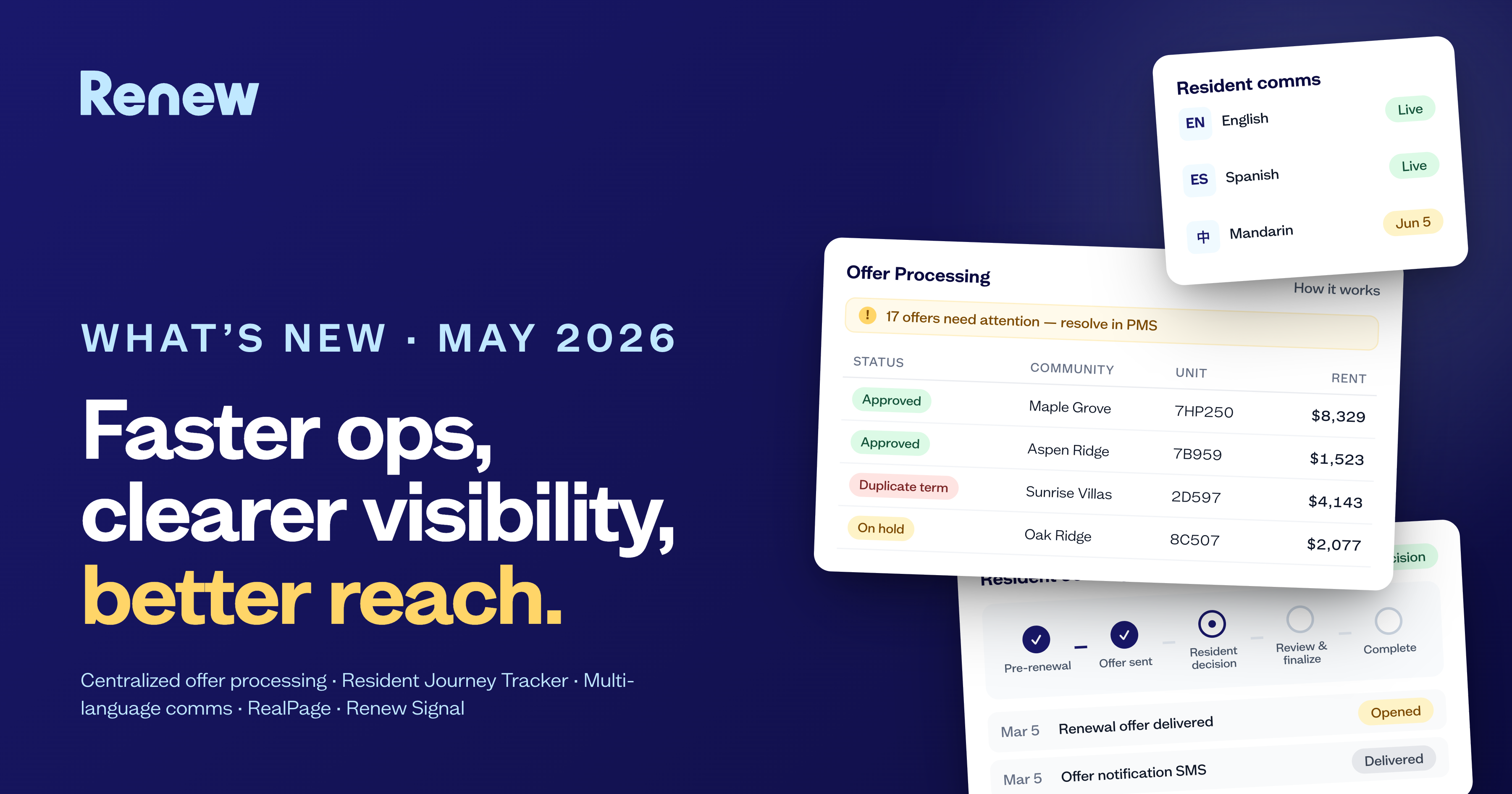
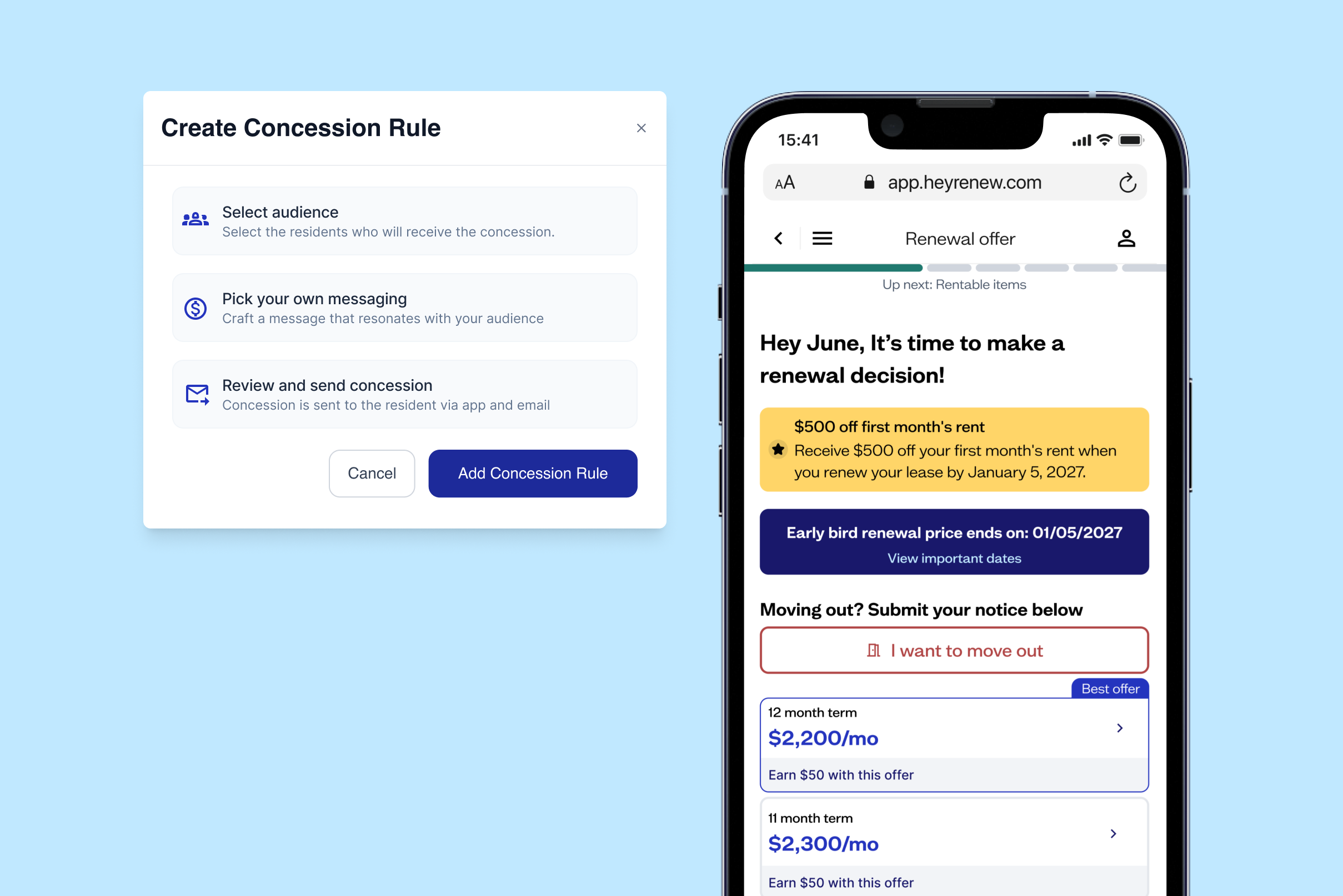
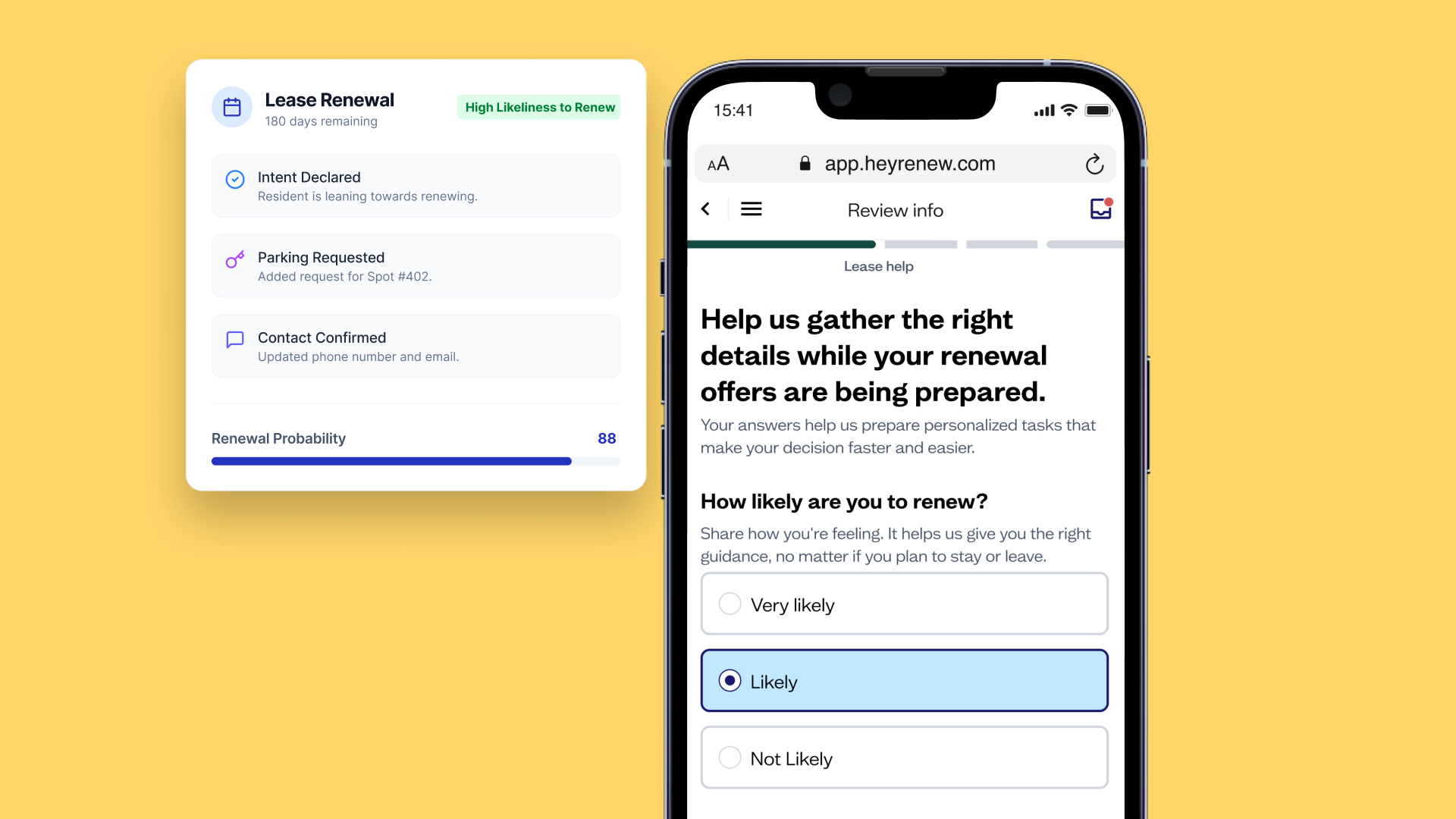
That’s where systems like Renew come in — connecting lease data, resident behavior, and timing signals to show which renewals need attention, when to act, and what actions to take. This gives teams a way to prioritize risk and respond earlier, rather than moving every lease through the same workflow.
The Future of Centralization in Property Management
Multifamily centralization is already changing how portfolios operate. The next phase is about how well those systems support the moments that most directly impact NOI.
Operators seeing stronger results use centralized workflows as a foundation, then add systems that surface the context needed to identify risk and act at the right time — especially around renewals, where timing, pricing, and follow-up determine the outcome.
That shift — from processing work to prioritizing decisions — is what ties centralized operations to real performance.
If you’re thinking about how to evolve your centralized model, it starts with visibility into what matters most: your renewals, your risk, and your revenue. Renew is built for that layer, designed to support centralized operating models and plug into the workflows of hybrid and off-site teams.
.png)
.png)
.png)
.png)
.png)
.png)
.png)
.png)
%20(1).png)
.png)
.png)
.png)
.png)
.png)
.png)

.png)
.png)
.png)
.png)
.png)
.png)
.png)
.png)
.png)
.png)

.png)

.png)






.png)
.png)
.png)